Last updated November 22, 2026
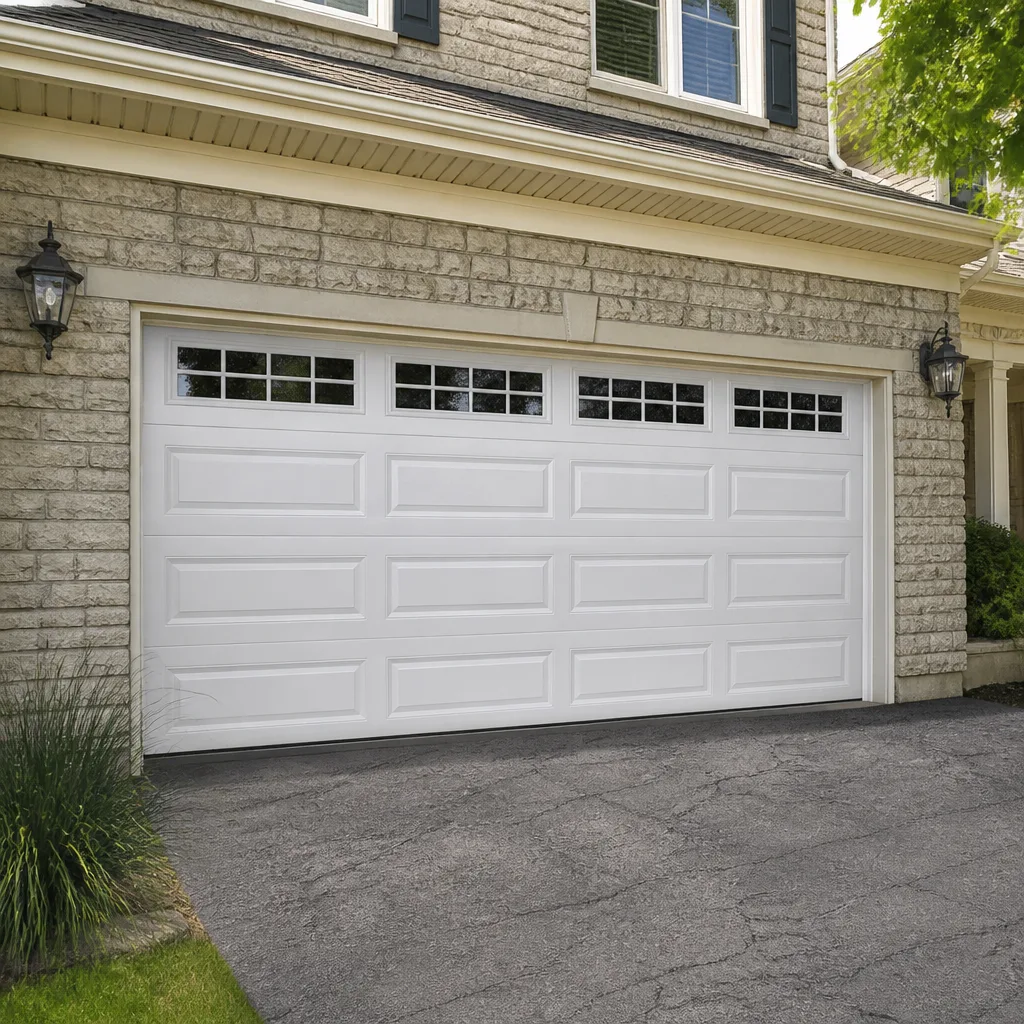 Raised-panel steel
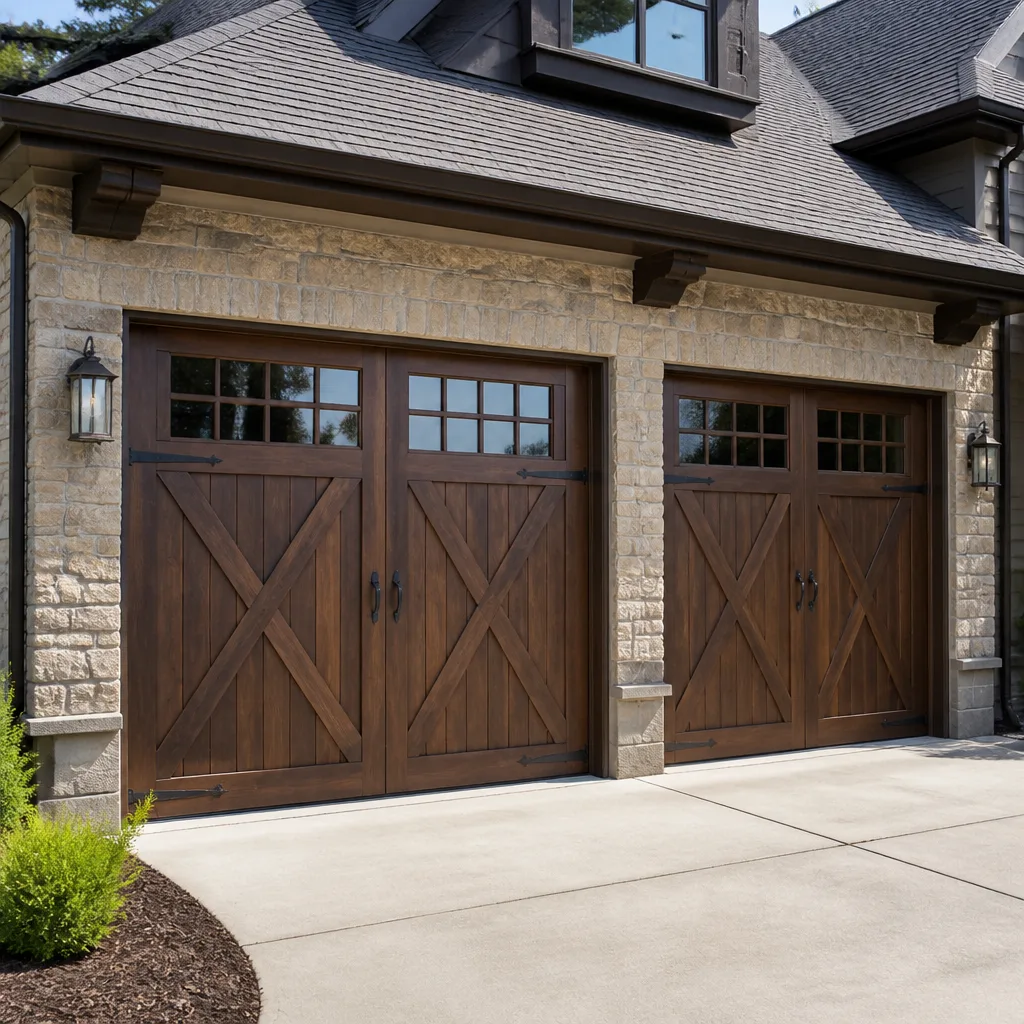 Carriage house
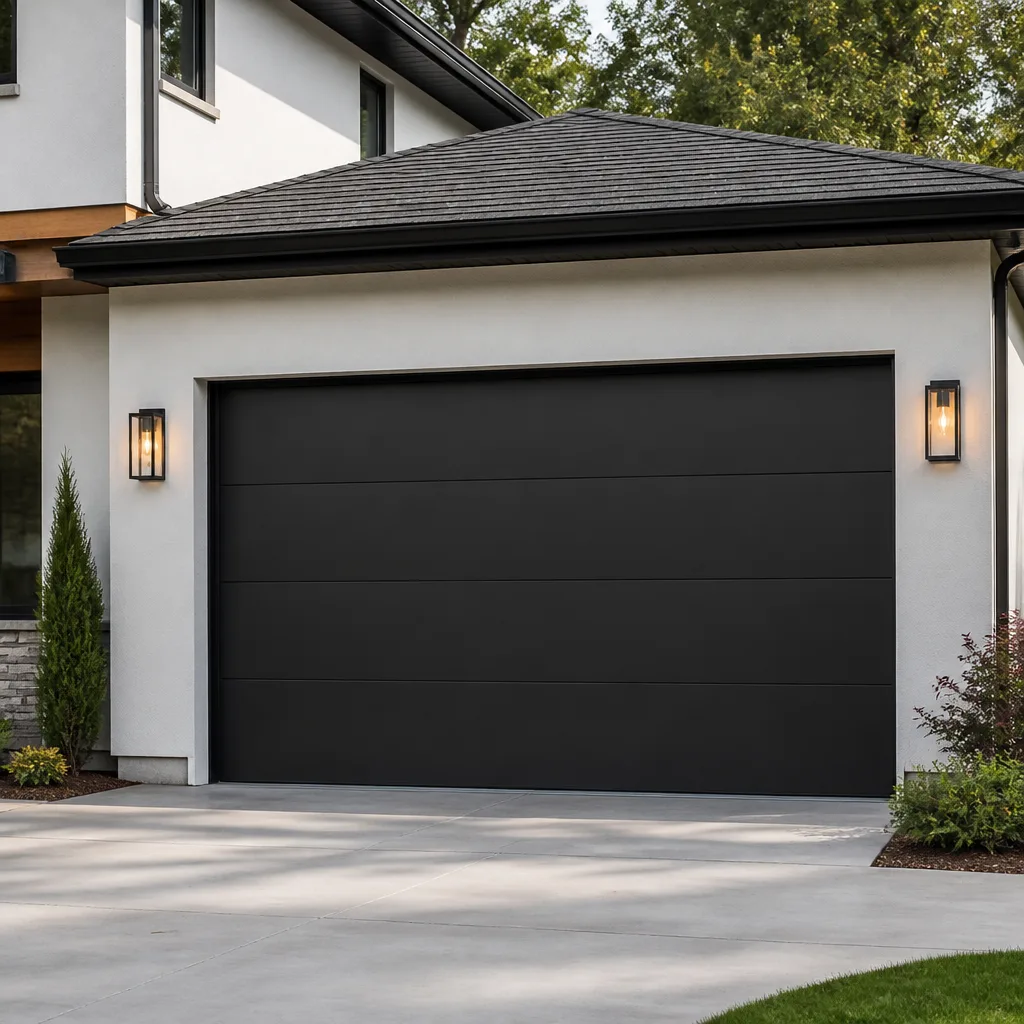 Modern flush
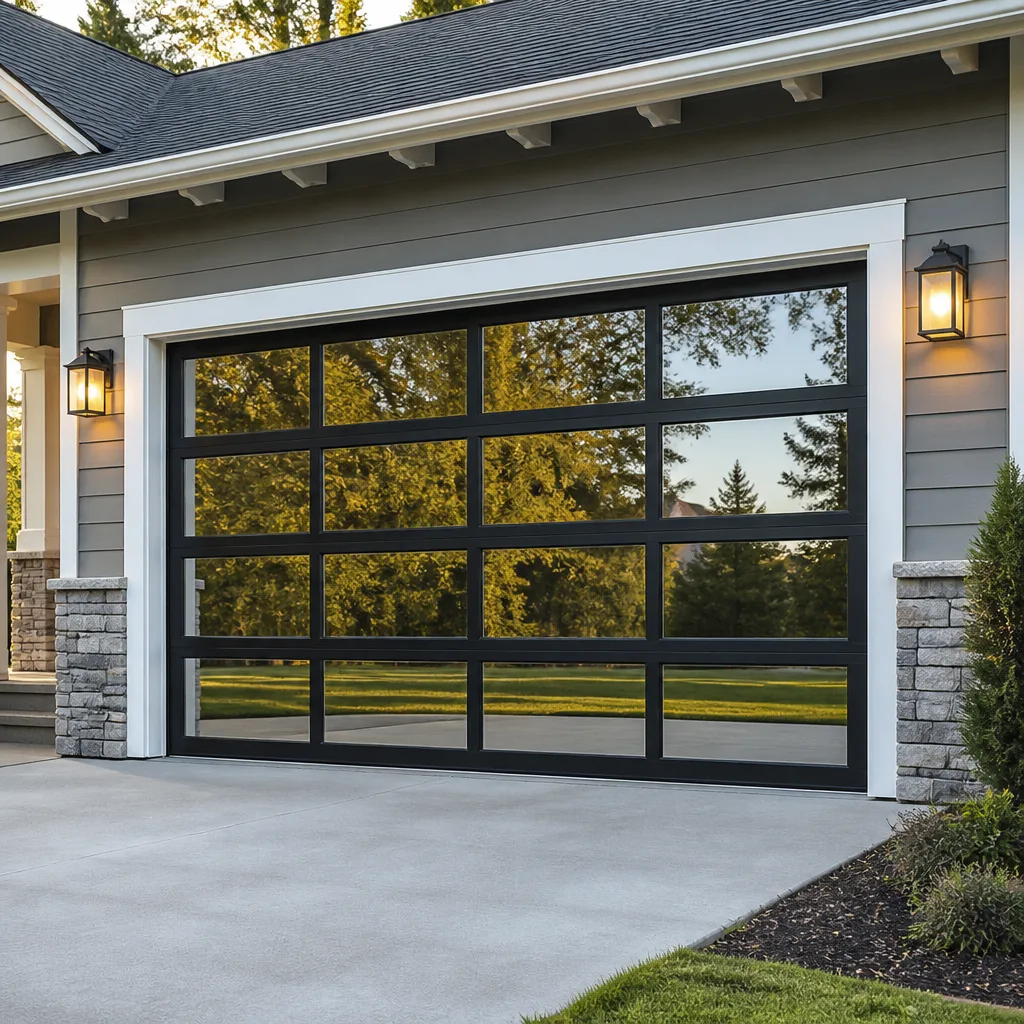 Full-view glass
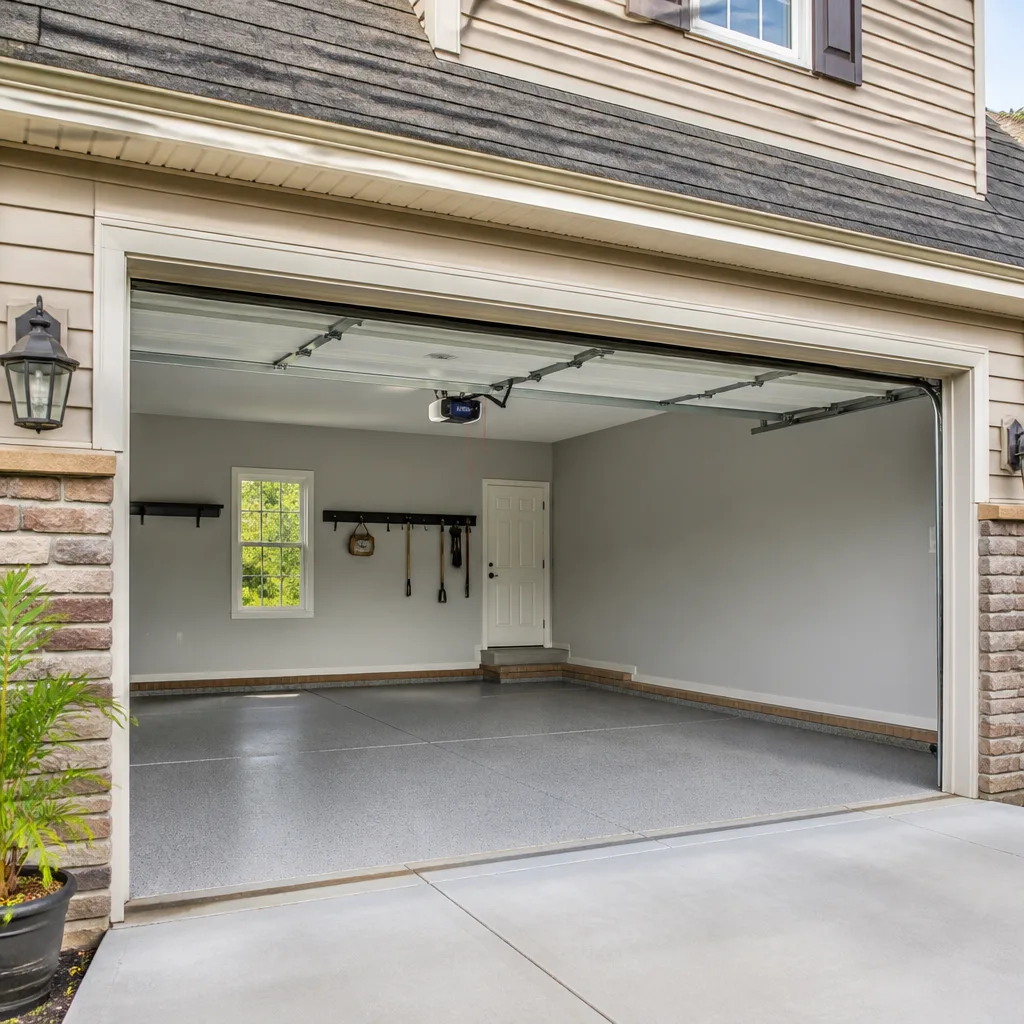 LiftMaster openers
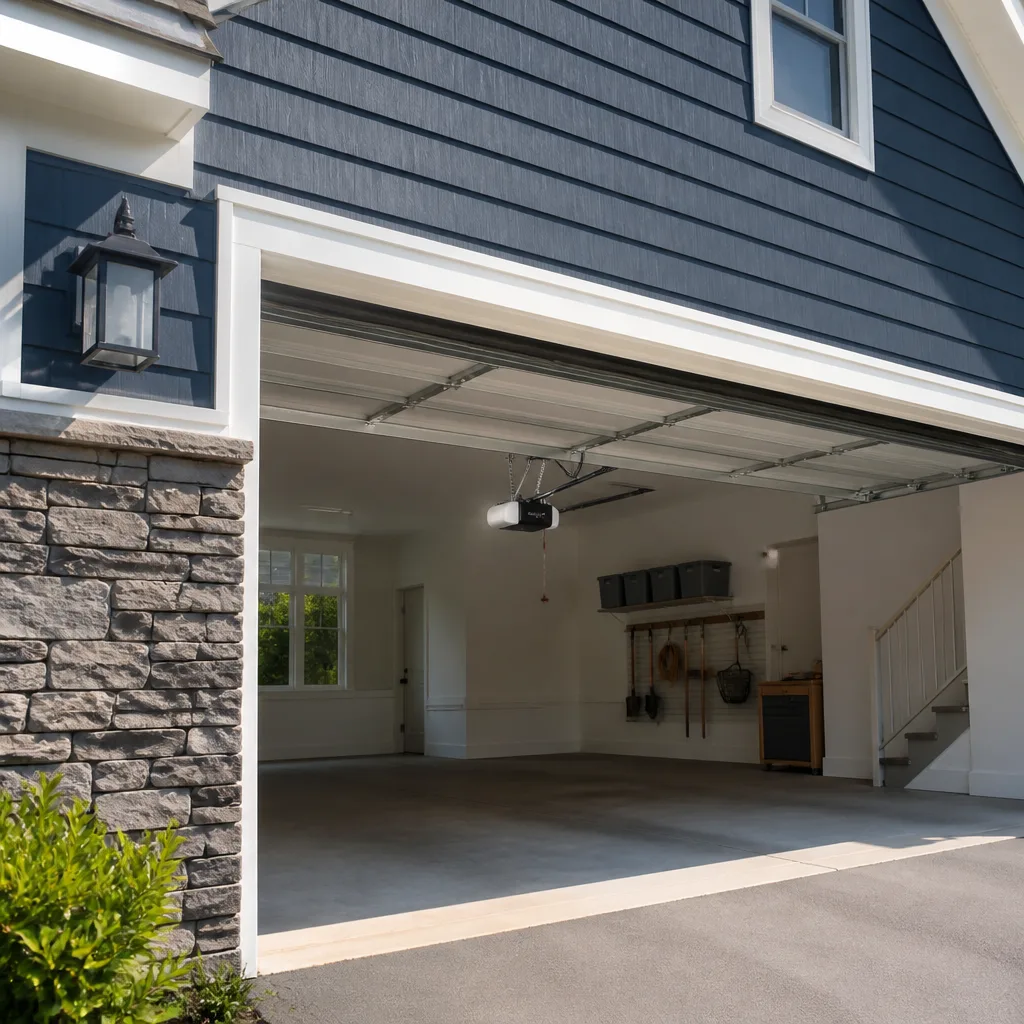 Chamberlain openers
Full 25-point door and opener safety check with every visit - springs, cables, rollers, tracks, and your LiftMaster or Chamberlain opener included
You get a price before we start. It does not change when the pro arrives.
Get your free estimateGarage Door Repair Troubleshooting in Middletown: Common Problems and How to Fix Them
Your garage door has hundreds of moving parts, but most repair calls trace back to just a few components. Springs, cables, sensors and openers account for the overwhelming majority of breakdowns we see in Middletown. The rest is usually the result of a door that has been forced past its limit or run without service until metal started grinding on metal.
Here’s the point most troubleshooting guides miss: the symptom you’re hearing or seeing tells you which component is failing before you touch anything. A door that reverses as it closes is a different problem than a door that won’t move at all, and the two call for very different next steps.
This guide teaches you to read your door’s symptoms the way a technician would. You’ll learn which problems are safe to handle yourself, which ones stop being safe the moment you touch them, and how to secure a disabled door so your garage isn’t standing open while you wait for a repair.
Quick Answer
Most garage door problems in Middletown come down to one of five things: a broken spring, a door off its track, a misaligned safety sensor, a worn opener, or a limit switch out of adjustment. Sensor and limit issues are usually safe to check yourself. Spring, cable and track problems are not, because those components operate under extreme tension and can cause serious injury if handled without proper tools and training. Call a technician for anything involving springs, cables or a door that’s come off its track.
Styles & brands we work with
- Raised-panel steel
- Carriage house
- Modern flush
- Full-view glass
- LiftMaster openers
- Chamberlain openers
Table of Contents
- How Your Garage Door Actually Works
- The Symptom-First Troubleshooting Guide
- Safe DIY Fixes vs. Stop-Here Jobs
- Why Connecticut Weather Speeds Up Wear
- The One Mistake That Turns a Small Fix Into a Big Repair
- How to Manually Release and Secure Your Door
- Preventive Habits That Add Years to Your Door
- When to Call a Professional
How Your Garage Door Actually Works
Before you can troubleshoot, it helps to know what’s moving when you press the button. A standard sectional door runs on one of two spring systems, and knowing which one you have tells you a lot about what can go wrong.
Torsion springs mount horizontally on a bar above the door, near the center. They wind and unwind as the door travels, storing and releasing energy to offset the door’s weight. Most newer homes have this setup. Extension springs, by contrast, run parallel to the horizontal tracks on either side. They stretch rather than wind.
Cables connect the springs to the bottom of the door through a system of drums on the torsion bar or pulleys on extension springs. The opener is the last piece – it doesn’t lift the door so much as guide it, working alongside the springs. Think of it this way: the springs do the lifting, and the opener does the steering. That distinction explains a whole category of weird symptoms, because a door with tired springs puts strain on an opener that was never built to carry the full weight.
Why does this matter for troubleshooting? Because the same symptom can have two different causes depending on your spring type. A door that opens a foot and stops might have a broken torsion spring, a snapped extension spring, or an opener with a limit switch problem. The fix for each depends entirely on what’s actually in the door.
Our technicians have up to 11 years of experience, and they work across Clopay, Amarr, Wayne Dalton and other major brands. That matters because the hardware in front of them varies by manufacturer, and a proper diagnosis depends on knowing how that specific system is built. The local professionals we connect you with are licensed and insured as their state requires, and all work is scheduled and priced before anything begins.
The Symptom-First Troubleshooting Guide
Here’s the framework we use. Match the symptom you’re seeing to the likely cause, then check whether it’s on the safe-to-touch list or the call-a-technician list. Most homeowners can handle the first group. The second group needs hands that know what they’re feeling for.
Symptom 1: The door won’t move at all. Press the button and listen. A hum with no movement means the opener is straining against something, or the springs have given out. Complete silence means power, a remote battery, a wall switch connection, or a failed opener board. Start with the simple electrical checks: breaker, remote battery, wall control. If the opener hums but doesn’t move, stop and call.
Symptom 2: The door opens about a foot and stops. This is a classic limit switch symptom on older openers. The limit switch tells the opener how far the door should travel. When it drifts, the door stops early. On many units this is a small adjustment in the opener housing. But if the door feels unusually heavy in that first foot, suspect a spring instead.
Symptom 3: The door goes up, then comes back down. This is almost always a safety sensor or a travel limit issue, and it’s one of the safest problems to check yourself. We cover the steps in the next section.
Symptom 4: The door makes grinding, squeaking or popping noises. Squeaking and light grinding often mean lack of lubrication or a worn roller. A loud pop followed by a door that won’t lift is a spring failure.
Symptom 5: The door hangs crooked or the bottom edge looks uneven. That points to a broken spring on one side, a stretched cable, or a track out of alignment. All three are technician territory.
- Door won’t move, opener hums: springs or opener drive. Call a technician.
- Door stops a foot up: limit switch or spring. Check limits if safe, otherwise call.
- Door reverses before closing: safety sensors. Safe to check yourself.
- Squeaking or grinding: lubrication or rollers. Safe to inspect.
- Loud pop then no lift: spring failure. Call a technician.
- Door hangs crooked: cable, spring or track. Call a technician.
Safe DIY Fixes vs. Stop-Here Jobs
Not every problem needs a truck. Some are genuinely within the reach of a homeowner with a screwdriver and 20 minutes. Others are jobs that can put you in a hospital bed. Knowing which is which is the whole point of troubleshooting before you start poking around.
Safe to check or adjust yourself:
- Safety sensor alignment. The photo-eye sensors near the bottom of the tracks must point at each other. If they’re knocked out of alignment, the door reverses or won’t close. Check that both lenses are facing each other, wipe them clean, and confirm the indicator light on each is solid.
- Limit switch adjustment. On most older openers, the up and down limits are small screws on the back of the unit. Turn them a quarter-turn at a time and test. If the door travels normally after a small adjustment, you’ve fixed it.
- Lubrication. Hinges, rollers, and the spring coils can be lubricated with a spray garage door lubricant. Never use grease on rollers, and never touch the spring with your hands. A light spray along the coil is enough.
- Remote and battery checks. Re-pairing the remote, replacing the battery, or resetting the wall control resolves a surprising share of “opener doesn’t work” calls.
Stop here and call a technician:
- Spring replacement. Torsion and extension springs are under enough tension to cause serious injury. Do not attempt to release, wind or replace a spring yourself.
- Cable work. Cables are under the same tension as springs and can whip if released incorrectly.
- Track realignment. A bent or misaligned track usually means something upstream failed. Straightening it by hand without diagnosing the cause will just cause the same failure again.
- Broken hinges or bent sections. These require the door to be supported and sometimes partially disassembled.
- Anything that requires the door to be held open or partially open while you work. A door caught mid-travel can fall.
Spring work is a named specialty for a reason. It’s the one repair on the list that gets mishandled most often by homeowners and general handymen alike. The local professionals we connect you with handle torsion and extension springs directly. If you suspect a spring problem, garage door spring repair is the right next step.
Why Connecticut Weather Speeds Up Wear
Middletown’s climate is hard on garage doors. Not in a dramatic way, but in a slow, predictable one. The freeze-thaw cycle and summer humidity create a set of seasonal failure patterns that show up here more than in drier or warmer parts of the country, and knowing the pattern helps you anticipate problems before they strand you.
Winter freeze-thaw cycles are the biggest culprit. Meltwater gets into the tracks and along the bottom seal, then refreezes overnight. That expansion can push a door slightly off its rollers or freeze a track to the door itself. Homeowners in Middletown wake up after a cold snap and find their door won’t budge. It’s not a broken spring – it’s ice in the track or a seal frozen to the floor. A few minutes with a heat gun or warm water usually clears it, but the freeze-thaw cycle also accelerates wear on the weatherstripping along the bottom and sides.
Summer humidity is the other half of the equation. Connecticut’s humid summers work on the metal parts of the door. Hinges stiffen, rollers develop flat spots, and untreated steel starts to rust at the joints. The bottom section of the door, closest to the slab, is the first to show it. Lubrication in late spring, before the humid stretch sets in, prevents most of this.
The result is a seasonal rhythm. In late fall, before the first hard freeze, is the best time to lubricate, check your weatherstripping, and have a technician look at spring tension. In early spring, after the thaw, it’s worth checking tracks and rollers for shifting. Middletown homeowners who do those two checks tend to skip the dramatic winter breakdowns.
Another local factor: older homes in the North End and along the Wesleyan campus area often still have original extension-spring hardware from their build date. Extension springs are more prone to failure when they’re tired, and Connecticut’s temperature swings push them harder than a stable climate would. If your door is older and you haven’t had it looked at, it’s worth knowing what you’re working with.
The One Mistake That Turns a Small Fix Into a Big Repair
Here’s the single most common costly mistake we see: forcing a door that’s partially off its track. The homeowner notices the door dragging or binding, assumes the track is just a little bent, and gives it a shove with the opener or by hand. What was a loose roller becomes a bent panel. What was a bent panel becomes a warped track. What was a track repair becomes a full panel replacement.
Why is it so damaging? Because a door off its track has lost its support geometry. The rollers are out of their channels or not seated correctly, and the door’s weight is no longer distributed the way it was designed to be. When you force it, the full weight of the door lands on whatever’s in the wrong place. Sections buckle. Cables get yanked. The track’s alignment gets worse, not better.
The right move when a door is partly off track is to stop. Don’t press the opener button. Don’t try to lift it by hand. If the door is stuck partway open, leave it there until a technician arrives. Support it if you can from underneath with something solid, but don’t try to disengage the opener or the springs yourself.
There’s a second, related mistake worth calling out: running an opener repeatedly when the door is binding. Every press of the button puts strain on a motor that’s already fighting something it shouldn’t be. A worn opener that burns out from repeated force is a much bigger repair than a track fix. If you press the button twice and nothing improves, stop. That’s the signal to call.
For the general repair side of this, garage door repair covers the track, roller and panel work that resolves most off-track situations once they’ve been properly diagnosed.
How to Manually Release and Secure Your Door
If your door is stuck open and the opener won’t respond, you need to release it from the operator arm and secure it before you leave it. This is safe on a door that’s already at rest. It is not safe on a door that’s mid-travel, and it is never safe to release a door with a broken spring.
Here’s the general sequence for a standard residential door:
- Confirm the door is fully open and at rest. Don’t do this while the door is moving or hanging crooked.
- Locate the manual release cord. It’s the red-handled cord hanging from the operator arm that connects to the door.
- Pull the cord straight down toward the door. You should feel the trolley disengage from the carriage with a small click.
- Lift the door by hand only if it’s balanced. A properly functioning door should feel light and stay put when you let go. If it slams or falls, stop – the springs have failed and the door is not safe to move manually.
- Lower the door fully by hand, tracking the bottom edge with your palm as it comes down, and close it flush to the floor.
- Re-engage the opener only when the door is fully closed and resting. Press the wall button once to see if the carriage reconnects, or pull the release cord again to reset it.
Once the door is closed, the garage is secure again. But if the door is closed and the opener isn’t working, you’re in a “no entry from the outside” situation. If you can’t get the door to close and lock, the next best step is to secure the garage opening with a secondary lock or a temporary barricade inside the door, so the gap isn’t standing open overnight.
For homeowners locked out or exposed after a garage door failure, emergency garage door response is a real service line. It’s not an upsell on top of normal repair – it’s the path for the situations that can’t wait. We’re open Sunday through Friday, 7am to 7pm, and closed Saturday. If a garage door fails on a Saturday, call us and we’ll book you for Sunday. We don’t want you to feel stranded over the weekend.
Preventive Habits That Add Years to Your Door
Most garage door failures are predictable. They announce themselves in small ways months before they strand you. A handful of habits catches most of them.
Lubricate twice a year. Once in late spring, before the humid stretch, and once in late fall, before the freeze. Focus on hinges, rollers and the spring coil. Use a garage door-specific spray lubricant – not WD-40, which is a solvent, not a lubricant.
Listen carefully once a week. Open the door from inside the garage and just listen. Squeaks, grinding, or a door that sounds like it’s fighting the opener are all early warnings. A door that sounds normal on Monday almost never fails on Tuesday without some kind of sound first.
Look at the door from outside once a month. Stand at the end of the driveway and look at the bottom edge. Is it even? Does one side sit higher than the other? Is there rust along the bottom section? Any of these suggest cables, springs or weatherstripping that’s starting to go.
Test the safety sensors every month. With the door open, wave an object in front of one of the sensors. The door should reverse if it’s trying to close. If it doesn’t, the sensors are misaligned or dead.
Have a professional tune-up before winter. A technician can check spring tension, inspect cables and rollers, and adjust limits and sensitivity in one visit. That’s the appointment that prevents the January morning emergency.
- Spring: Have a technician inspect annually. Never attempt any spring work yourself.
- Rollers: Replace plastic rollers with nylon at the first sign of flat spots.
- Weatherstripping: Replace bottom seal when it cracks or hardens.
- Openers: Test remote and wall control monthly. Garage door opener repair is cheaper than replacement, but only if caught early.
- Tracks: Inspect for dents after storms or impacts, especially where things get pushed past the door in a tight garage.
Common Mistakes to Avoid
- Forcing a door that’s partly off track. This is the single most expensive mistake homeowners make. Even a light shove puts the full weight of the door on damaged geometry and turns a small fix into a panel or cable replacement.
- Spraying WD-40 on the spring and rollers. WD-40 dries out and attracts dust. Use a dedicated garage door lubricant. This matters more in Middletown’s humid summers, where stiff joints are common.
- Trying to adjust torsion springs yourself. Springs are under enough tension to cause serious injury. The money saved on a repair bill isn’t worth the risk.
- Ignoring a door that’s started to squeal. Squealing is early-warning failure. A $0 fix today (lubrication) prevents a bigger repair bill in a few months.
- Pressing the opener repeatedly when the door won’t move. Every press adds strain to an opener that’s already struggling. Two tries, then stop.
- Assuming the opener is at fault when it hums but doesn’t move. Nine times out of ten, that’s a spring problem, not an opener problem. Replacing the opener won’t fix it.
- Leaving a disabled door open overnight. If your door won’t close, secure the opening before you sleep. A manual release and a full close is the safest general move.
See the difference
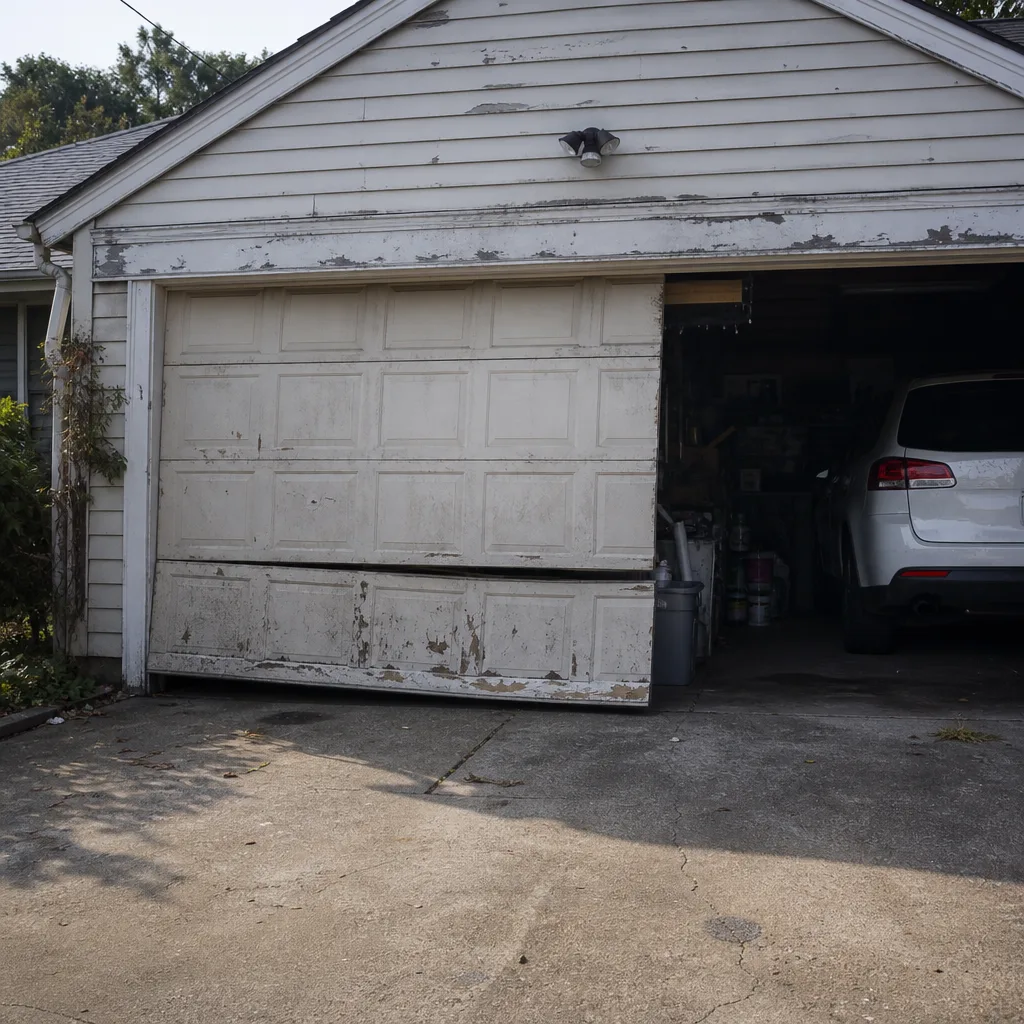 Before
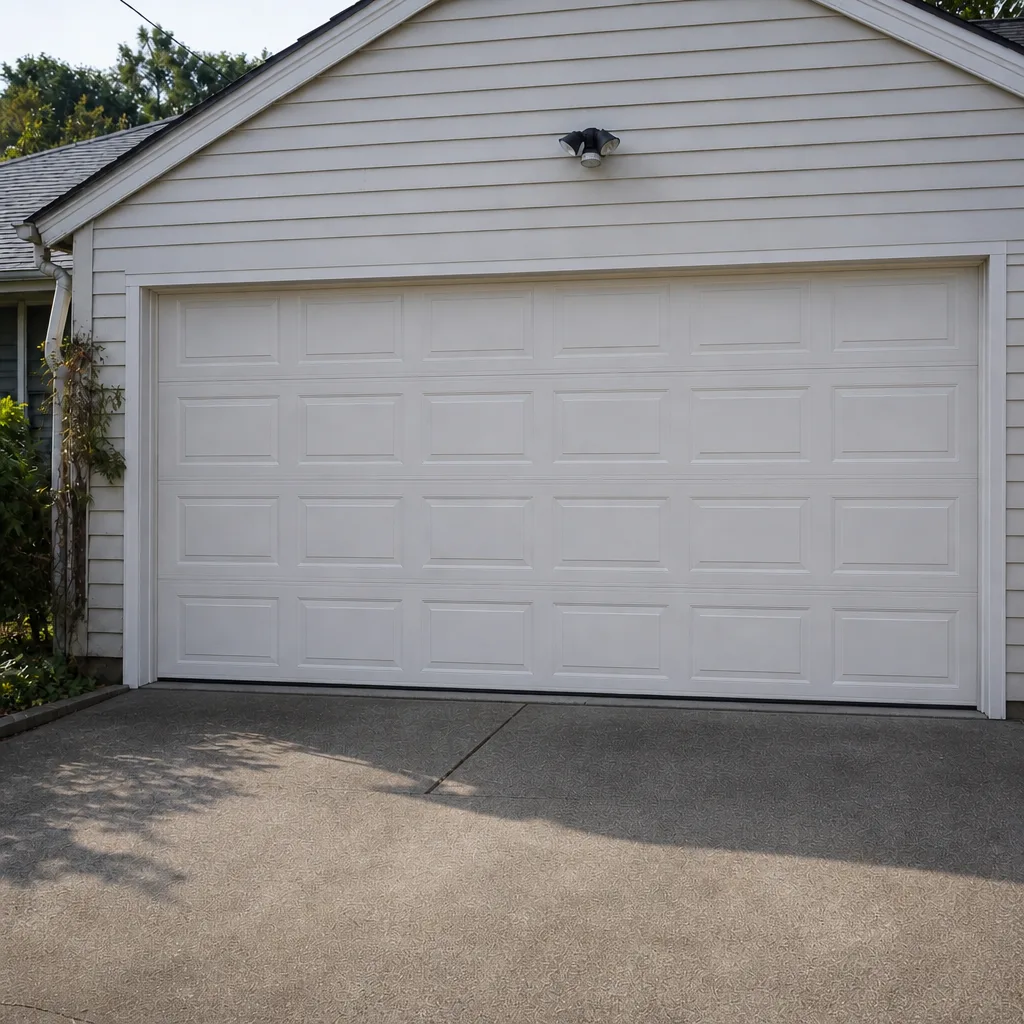 After
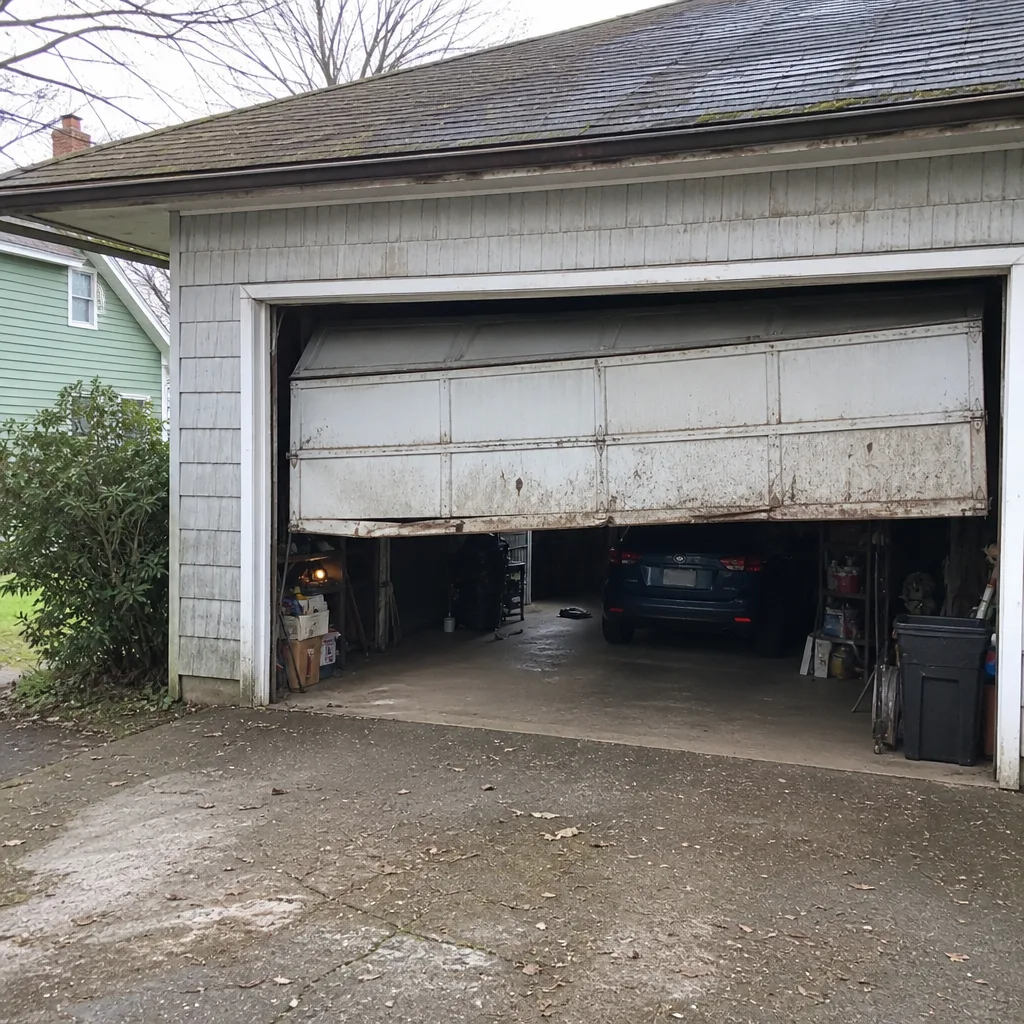 Before
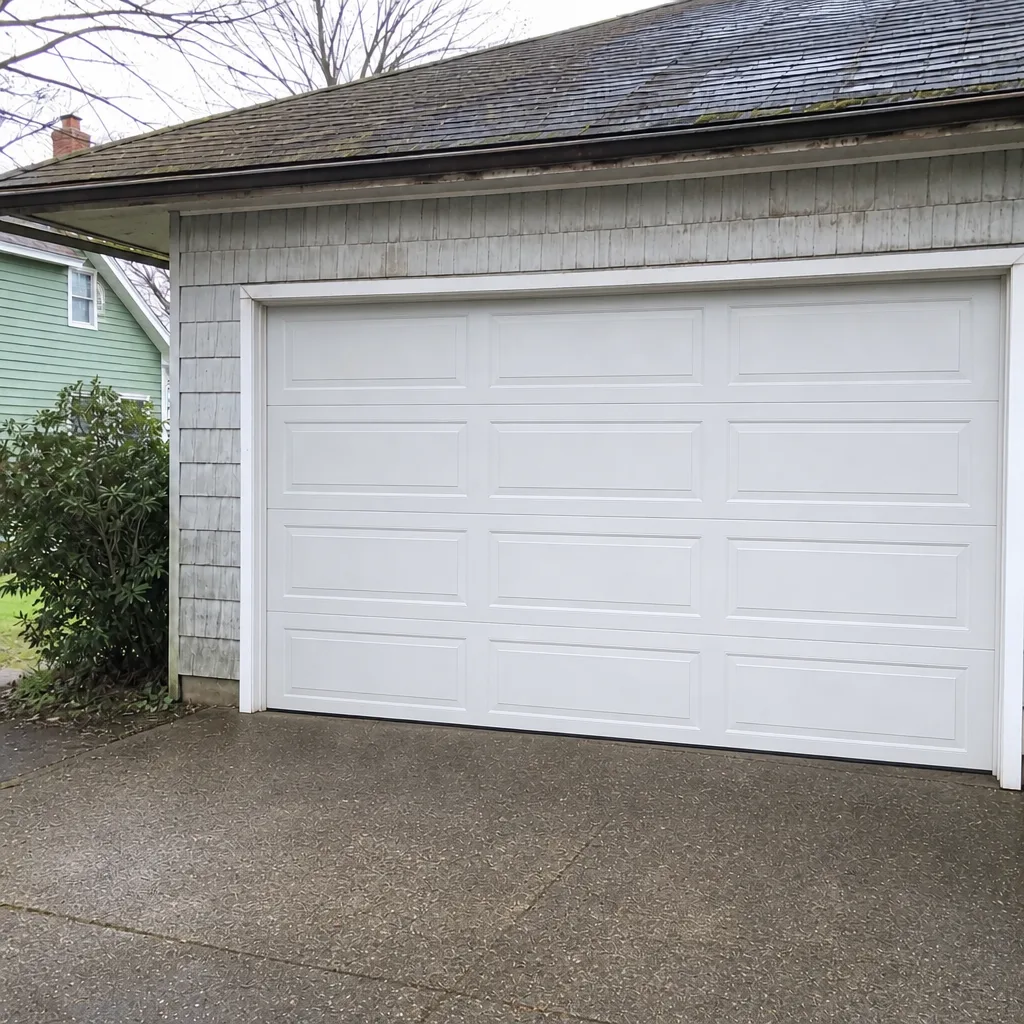 After
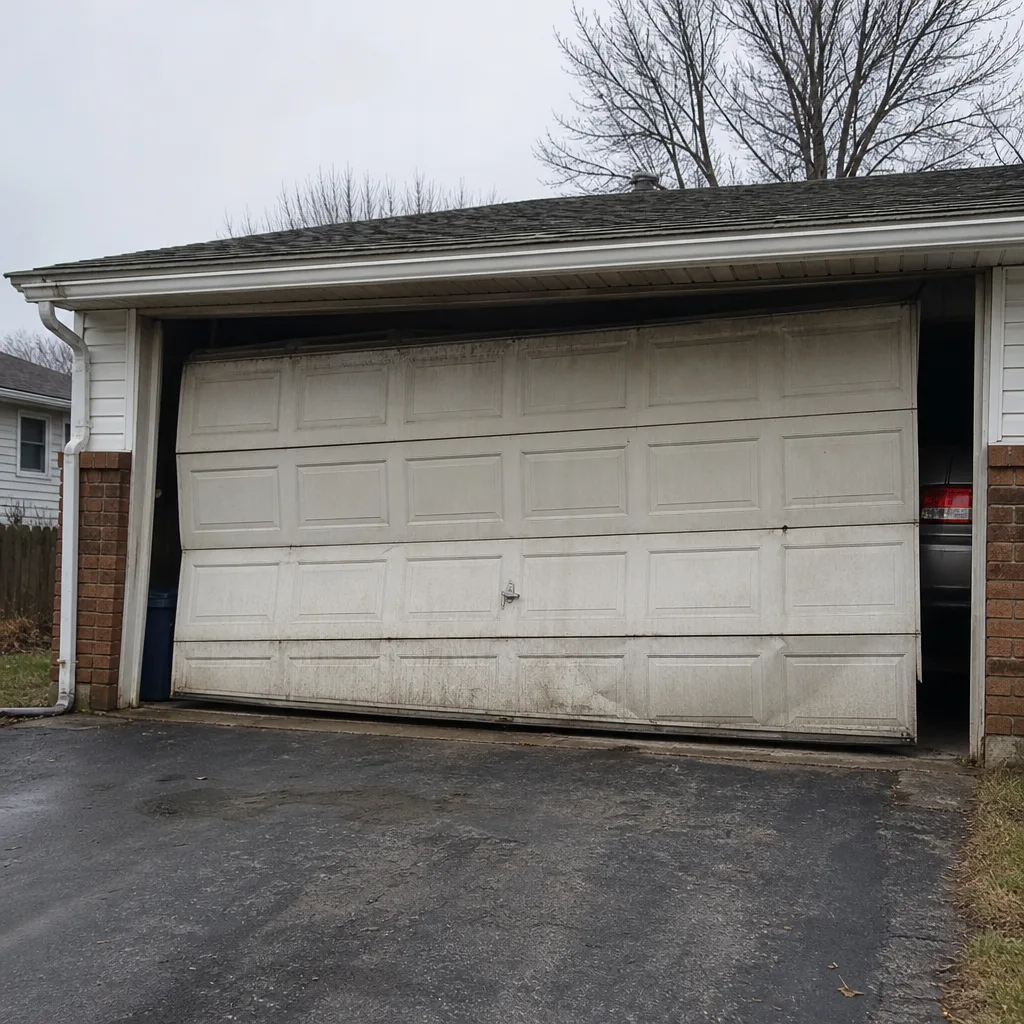 Before
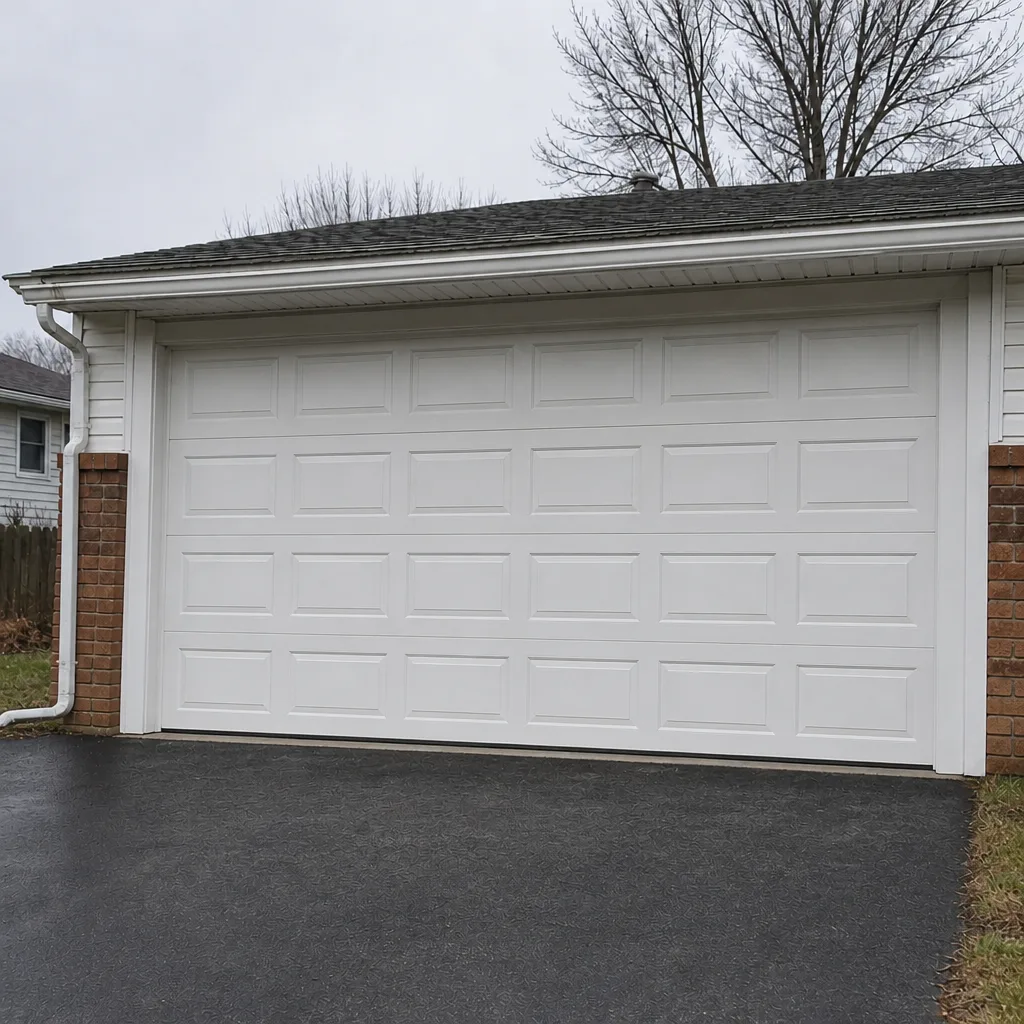 After
When to Call a Professional
Call a technician if any of these are true: the door has broken spring noise or won’t lift past a few inches; the door is off its track or hanging crooked; the cables look slack, frayed, or off their drums; the opener hums but doesn’t move the door; you’ve been locked out or exposed by a failure you can’t fix; or the door has started to reverse incorrectly and sensor and limit checks haven’t helped. Any of these is a job for someone with the tools and training to do it safely. The local professionals we connect you with are licensed and insured as their state requires, and all pricing is quoted and agreed before work begins. Bramley Garage Door Repair offers free estimates in Middletown – call (877) 492-2037.
Frequently Asked Questions
Most common repairs in Middletown fall into a few typical ranges, though every quote depends on the specific door and the diagnosis. Sensor alignment, limit adjustment and lubrication are usually the simplest and least expensive calls. Spring replacement is typically the largest line item on a repair invoice, and it varies by spring type and door weight. Opener repair and track work land in the middle. The written estimate sets the final price, and the price you agree to before work begins is the price on the invoice. Call (877) 492-2037 for an exact quote – estimates are free.
For failures that can’t wait – broken springs, doors off track, or openers that won’t respond – we offer emergency garage door response and same-day service when possible. We’re open Sunday through Friday, 7am to 7pm, and closed Saturday. If a door fails on a Saturday, call and we’ll book you for Sunday. Call (877) 492-2037 to check availability.
No. The technician diagnoses the problem, writes up a quote, and you approve the price before any work begins. That’s the final price for the repair described. If a technician finds additional issues during the job, you’ll be told and given the option before anything extra happens. The written estimate is the number that matters. Call (877) 492-2037 for a free estimate.
A door that opens about a foot and stops usually has a limit switch out of adjustment, or a spring that’s failing to carry the door’s weight past that point. If the door feels heavy in that first foot, suspect the spring. If it moves freely but stops at the same spot every time, it’s likely the limit. Check the limit on older openers yourself; call a technician if the door feels heavy. Call (877) 492-2037 if you’re not sure.
The local professionals we connect you with are licensed and insured as their state requires. Our technicians have up to 11 years of experience and work across the brands most commonly installed in Middletown homes, including Clopay, Amarr, Wayne Dalton and Craftsman. Call (877) 492-2037 for a free estimate.
If the door is stuck open and the opener won’t respond, use the manual release cord (only if the door is at rest and not mid-travel), lower the door by hand, and close it fully. If the door won’t close, secure the opening with a barricade or secondary lock from the inside so the garage isn’t standing open. Don’t try to force the door or adjust the springs. Call (877) 492-2037 as soon as you can so we can schedule a technician.
The Bottom Line
Most garage door problems in Middletown fall into a handful of predictable patterns, and the symptom you’re seeing tells you which. Sensor and limit issues are usually safe to check yourself. Spring, cable and track problems are not. Forcing a door that’s partly off its track is the fastest way to turn a small repair into a big one. When the door has broken spring noise, won’t lift past a few inches, or has started to hang crooked, stop pressing the button and call someone with the right training. We work on the brand you already have, and garage doors are all we do. For a free estimate in Middletown, call (877) 492-2037.
Ready to get your door working again? Bramley Garage Door Repair is here for it. Call (877) 492-2037 to schedule a free estimate or to get a same-day call for a repair that can’t wait.
Written by the team at Bramley Garage Door Repair.