Last updated November 22, 2026
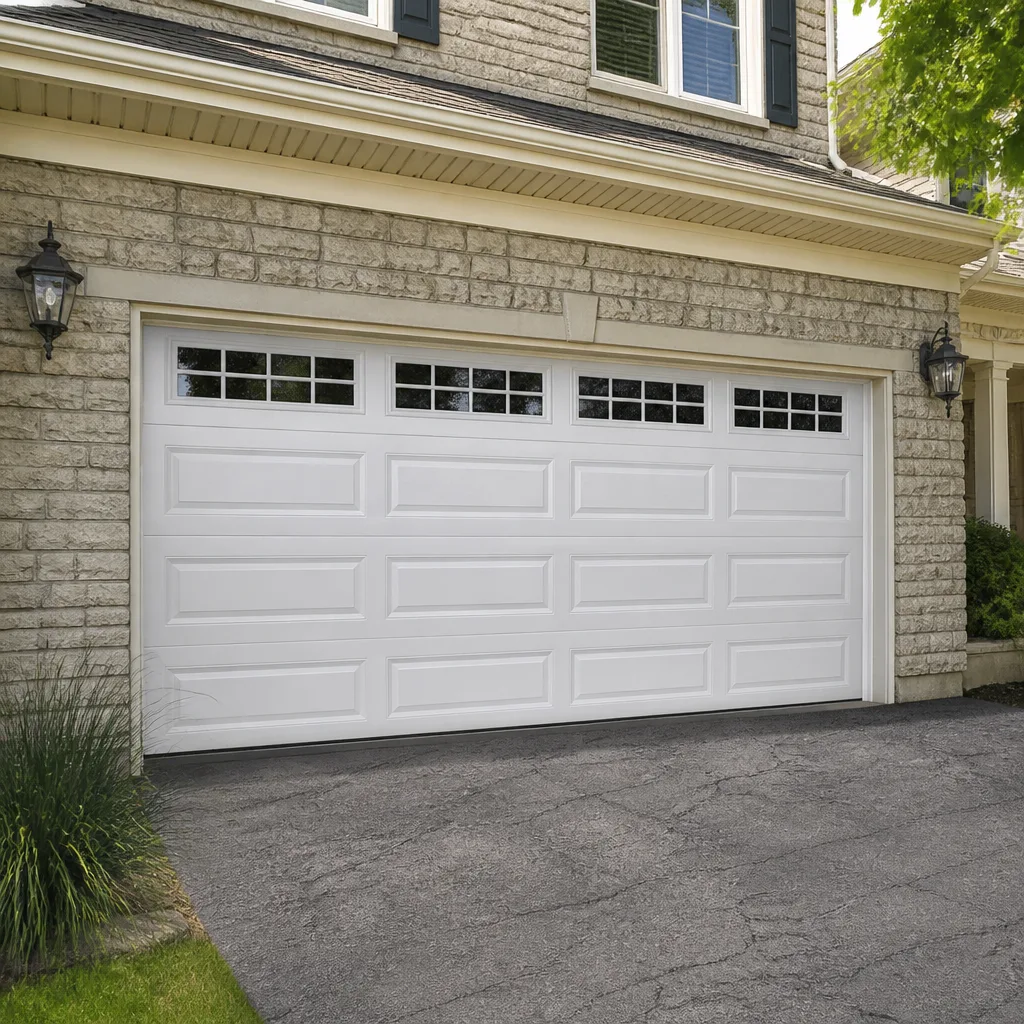 Raised-panel steel
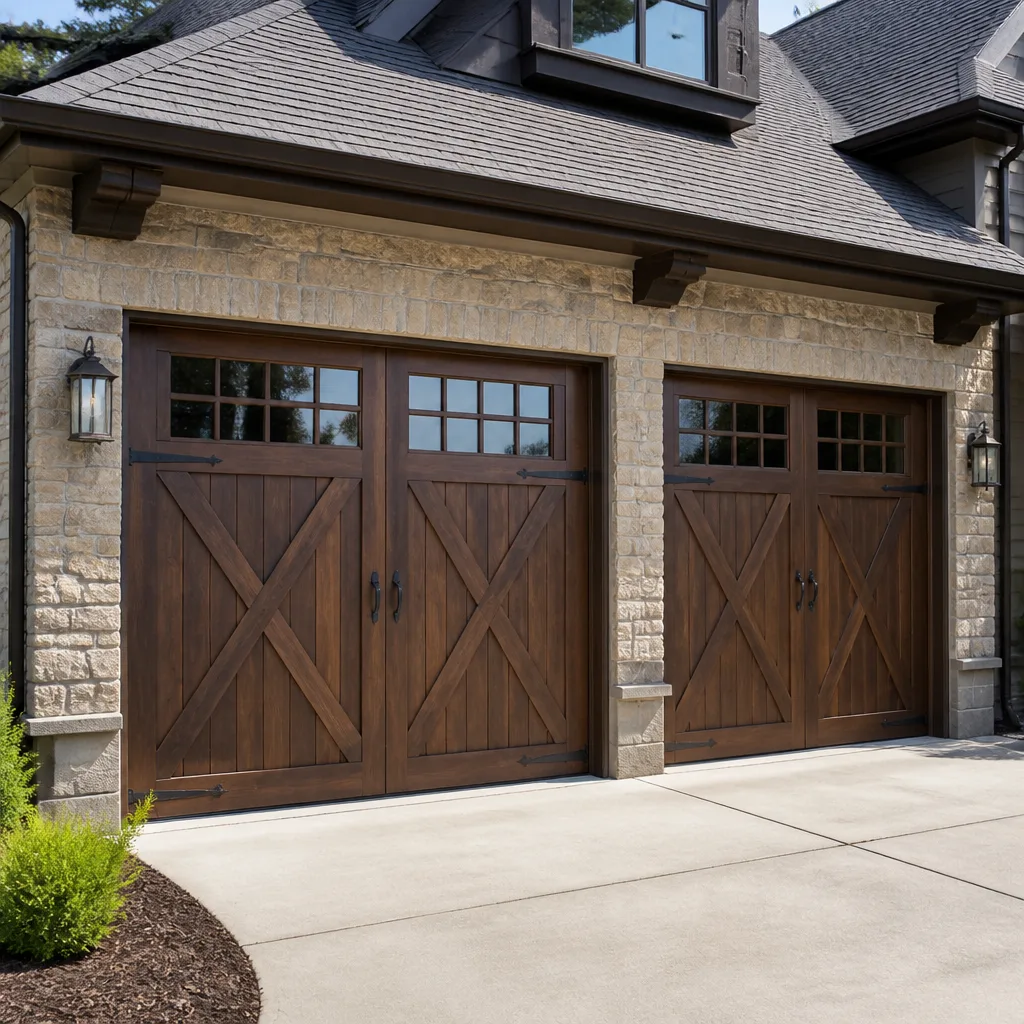 Carriage house
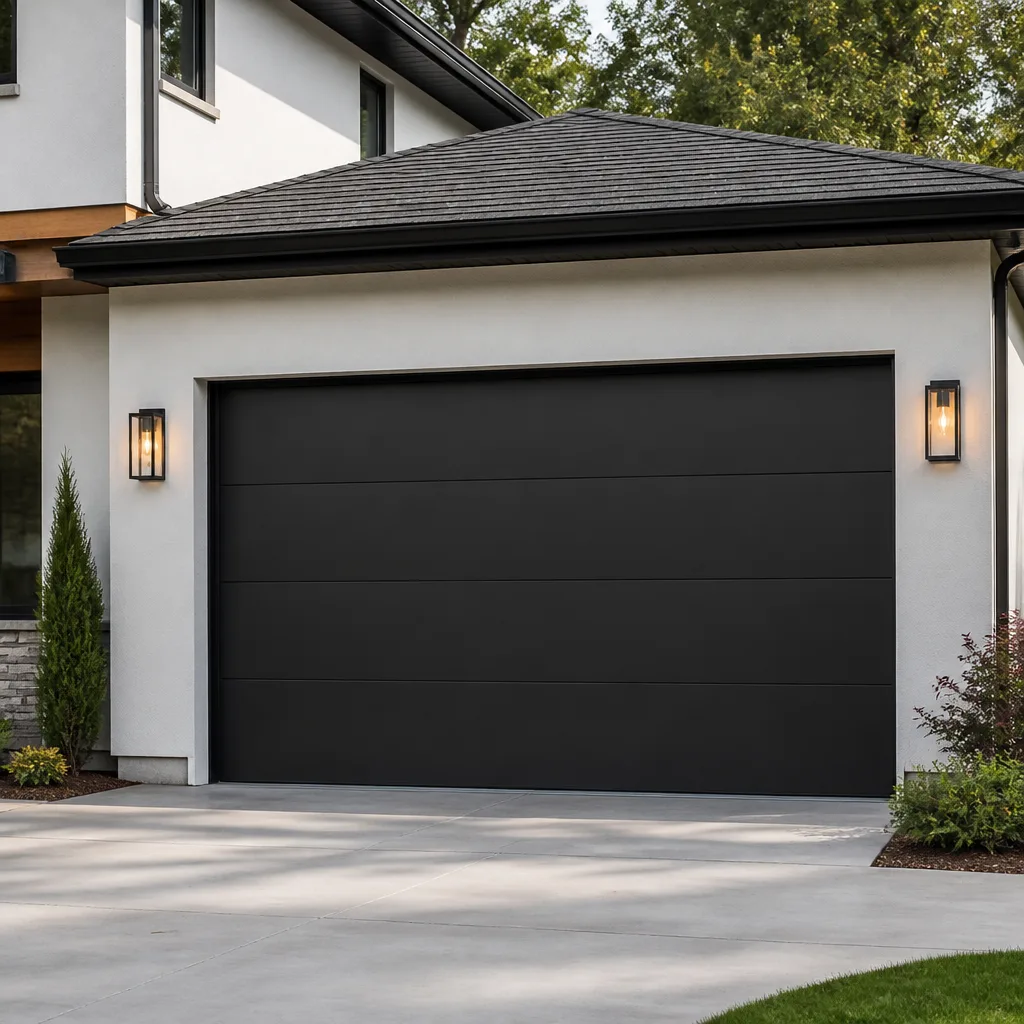 Modern flush
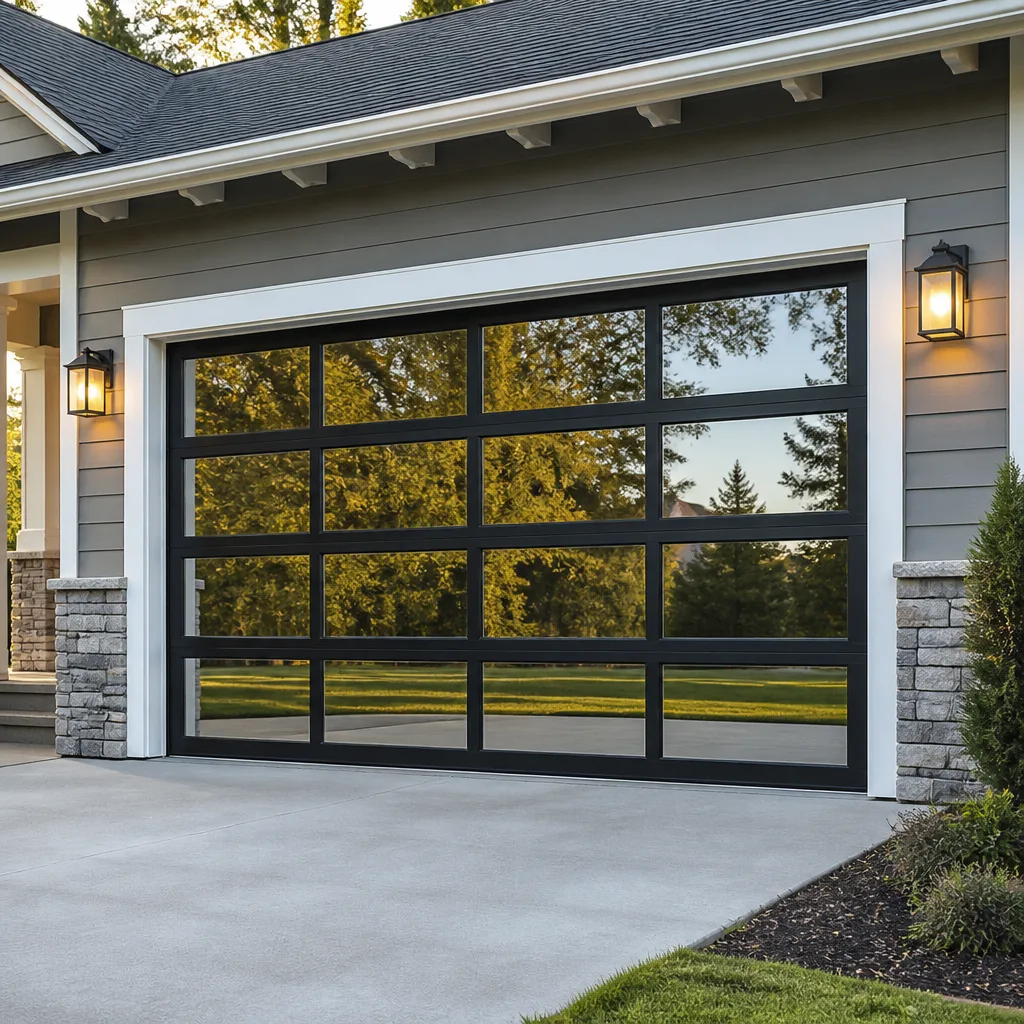 Full-view glass
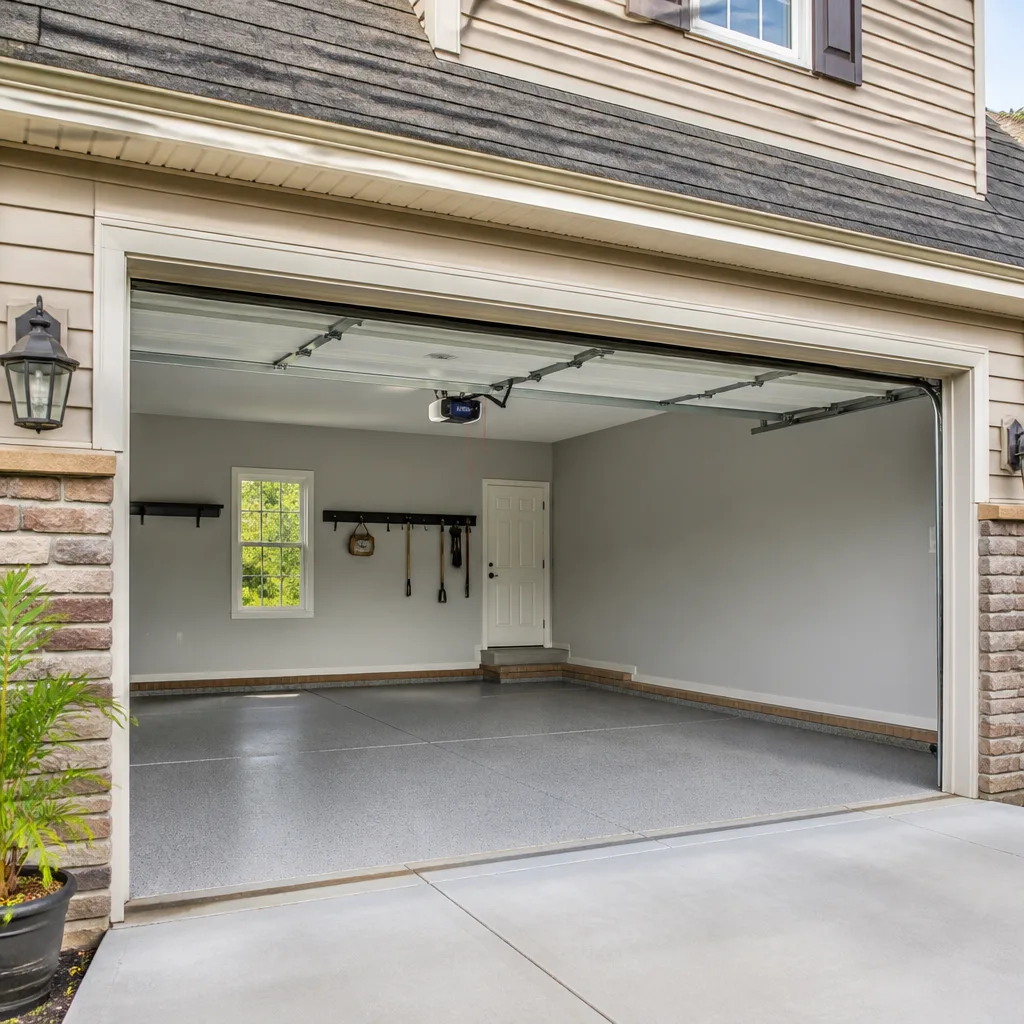 LiftMaster openers
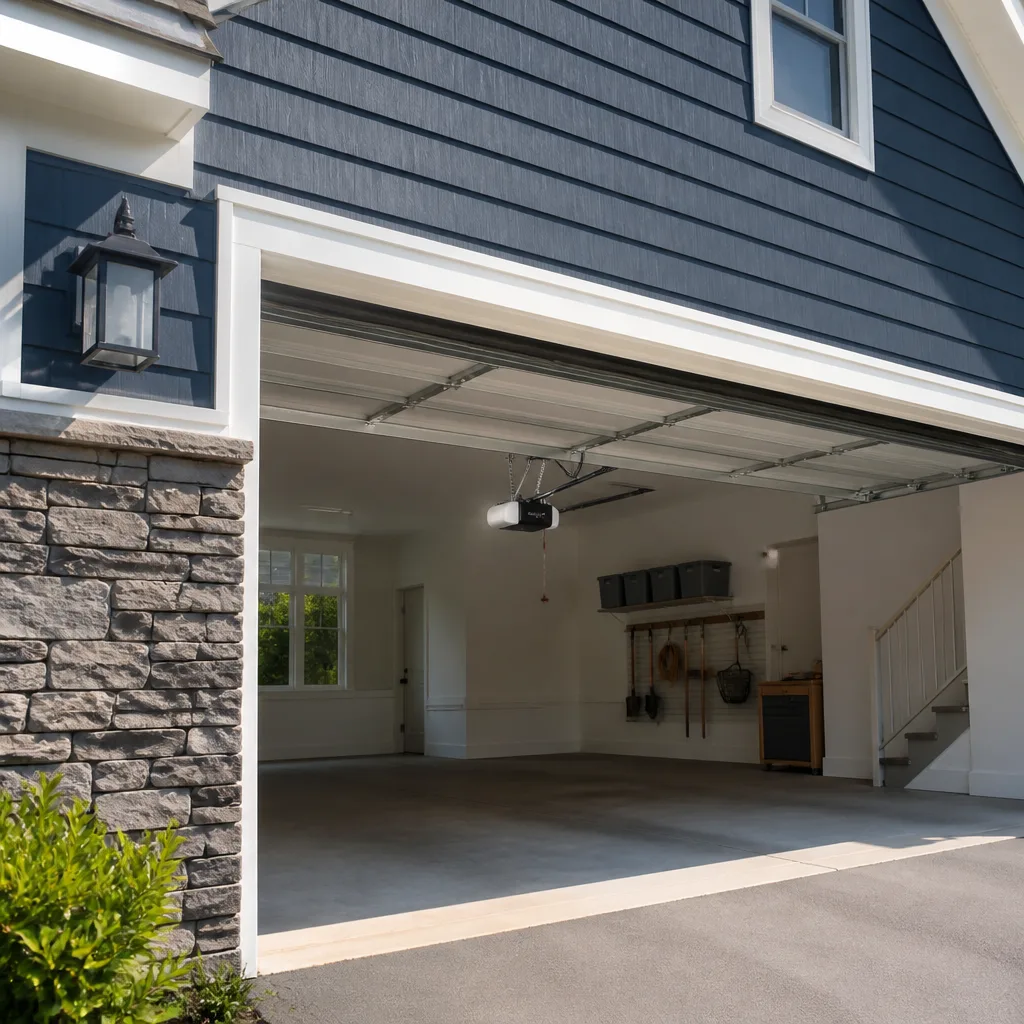 Chamberlain openers
Full 25-point door and opener safety check with every visit - springs, cables, rollers, tracks, and your LiftMaster or Chamberlain opener included
You get a price before we start. It does not change when the pro arrives.
Get your free estimateGarage Door Warning Signs: A Middletown Homeowner’s Reference Guide
Most homeowners treat a noisy garage door the way they treat a squeaky floorboard: they get used to it. That’s the trap. A garage door doesn’t snap a spring or drop off its track out of nowhere. It telegraphs the problem for weeks in grinding, popping, uneven travel and a door that’s gotten a little slower than it used to be. The homeowners who avoid a costly surprise aren’t luckier than you – they know which signals are cosmetic and which are the last stage before a failure that happens in about a second. This Middletown guide walks through the sounds, the visual tells, the urgency ladder and a 30-second balance test so you can read your own door before it fails.
Bramley Garage Door Repair focuses on one thing: garage doors and the openers that drive them. We work on the brand you already have, and that focus matters when you’re trying to tell a harmless rattle from a wire about to let go.
Quick Answer
The main garage door warning signs are grinding, squealing, popping or rattling sounds, a door that moves slower or more unevenly than it used to, gaps or sagging panels, and a door that won’t stay balanced when you lift it halfway. Any of these can signal a worn bearing, a loose cable, a tired opener or a spring that’s about to fail. In a Middletown winter, cold metal and frozen hardware make some of these worse, which is why the sound of your door in January tells you more than it does in July.
Styles & brands we work with
- Raised-panel steel
- Carriage house
- Modern flush
- Full-view glass
- LiftMaster openers
- Chamberlain openers
Table of Contents
- What your door’s sounds are telling you: a sound-based diagnosis
- The urgency ladder: what can wait for a week and what needs a same-day call
- Why a door that’s “a little slow” isn’t a minor issue
- The 30-second balance test and what it tells you about spring health
- Visual warning signs that most homeowners walk past
- Three warning signs unique to older Middletown homes
- How a Middletown winter stresses your door
- Warning signs that come from the opener, not the door
What Your Door’s Sounds Are Telling You: A Sound-Based Diagnosis
Generic guides will tell you a noisy door “could be many things,” which is useless. In practice, the specific sound narrows the problem fast. Here’s how we read the four most common ones.
- Grinding is a metal-on-metal sound, usually low and constant as the door travels. It most often points to dry or worn rollers, a bearing that’s lost its grease, or a torsion shaft that’s starting to seize. Grinding that gets louder over a few weeks is a bearing that’s failing, not a door that needs a squirt of oil.
- Squealing is high-pitched and peaks at a specific point in the door’s travel. That’s typically a hinge, a roller, or a spring that’s binding rather than rolling smoothly. Squealing is the most benign of the four – it’s often solved by proper lubrication – but it belongs on your watch list if it shows up alongside grinding.
- Popping is the one we take most seriously. A sharp pop, sometimes felt as much as heard, can mean a panel is cracking at the hinge stile, a cable has slipped out of its drum, or a spring is about to let go. A single pop followed by the door going slack is the classic spring-break moment.
- Rattling as the door travels is usually loose hardware – hinges, brackets, bolts backing out. It’s the least urgent sound in isolation, but it can mean a bolt is working its way free of a bracket that’s under real tension, so it deserves a look rather than a shrug.
One more thing: sound changes with temperature. In a Middletown January, cold metal contracts and greased parts stiffen. A door that’s quiet in summer can announce itself loudly in the first cold snap. That’s not the door being dramatic – it’s the same wear showing up under colder conditions.
The Urgency Ladder: What Can Wait a Week and What Needs a Same-Day Call
Not every warning sign is an emergency, and we’ve seen plenty of homeowners panic over a squeak while ignoring a serious cable problem. The urgency ladder sorts them.
Signs you can schedule within a few days
- A door that squeals but still opens and closes fully and evenly.
- Loose hinges or brackets that rattle but hold.
- A remote or wall button that takes two or three presses to respond.
- A door that’s noisier than it was last year but still on a normal cycle.
Signs that warrant a call sooner
- Grinding that’s gotten louder over a week or more.
- A door that reverses before fully closing, or stops partway.
- Visible gaps at the bottom or between panels.
- A door that seems to drag or lag in one direction.
Signs that need a same-day call
- A loud pop followed by the door going slack, hanging halfway, or refusing to lift.
- A door that’s come off its track or visibly jumped a roller.
- A snapped cable – you’ll often see it hanging by the side of the door.
- A door that won’t close and is leaving the garage open to a Middletown street.
- Any door that’s moved unexpectedly on its own or dropped.
If you’re in the last group, treat it as an emergency. A door hanging off its track or a broken spring under load is a real hazard, and the door should be left alone until someone trained looks at it. Bramley Garage Door Repair offers emergency response for exactly these failures, so you’re not leaving a voicemail at midnight. For everything else, a scheduled garage door repair visit is the right move, and the price is quoted and agreed before any work begins.
Why a Door That’s “A Little Slow” Isn’t a Minor Issue
A door that’s a few seconds slower than it used to be feels like no big deal. It is a big deal, and here’s the mechanical reason: a garage door runs on a counterbalance system. The springs carry most of the door’s weight, and the opener lifts only the difference. When a spring starts to weaken, the opener has to lift more of the door’s weight than it was designed to. It still works – just more slowly, and with more effort.
That extra load is what turns a slow door into a stopped door. The opener’s gears, the drive belt or chain, and the motor all wear faster once they’re fighting a door the springs should be carrying. In our experience, a door that’s “a little slow” in October is often the door that won’t open in February. The slowness is the spring telling you it’s near the end of its life, not a personality change.
Slowness also shows up as uneven travel – the door lagging on one side, or taking a moment to gather itself before it climbs. That usually means one spring is carrying less than the other, or a cable is binding on one side. Either way, the door is loading one corner of the frame harder than the rest, and that’s what shortens the life of the rollers and hinges on that side.
The fix isn’t to speed up the opener. It’s to find out why the door is working harder than it should. That’s a diagnosis job, and it’s the kind of thing we do all day in Middletown.
The 30-Second Balance Test and What It Tells You About Spring Health
You can learn more about your springs from a 30-second manual test than from anything you can see. Here’s how it works.
- Disconnect the opener. Pull the release cord or handle so the door is running on its own, not on the motor.
- Lift the door about halfway – roughly waist height – and let go.
- Watch what it does. A properly balanced door stays put where you leave it. A door that drifts down is being under-supported by its springs. A door that drifts up is being over-supported, or the springs were set too tight at some point.
That result is a direct read on spring health. A door that won’t hold halfway is telling you the springs aren’t carrying their share. It doesn’t tell you which spring, or whether it’s torsion or extension, or how close to failure it is – that takes a look at the hardware. But it does tell you the counterbalance has drifted, and a drifted counterbalance is the number one reason openers fail early.
A safety note that matters: this test is a lift and a look, nothing more. Do not reach for the springs, the cables or the winding hardware. Torsion and extension springs are under heavy tension, and the cables are loaded too. Touching the wrong part can release that energy in a hurry. Adjusting or replacing springs is a job for a trained professional, which is why garage door spring repair is a named specialty for us rather than something we hand off.
Visual Warning Signs That Most Homeowners Walk Past
Sound gets your attention, but the eyes catch what the ears miss. Walk around your closed door once and check these.
- Gaps at the bottom. A visible line of daylight under a closed door usually means the bottom seal has worn or the door isn’t closing flush. In a Middletown winter, that gap lets cold air and moisture in, and moisture is what rusts hinges and rollers.
- Sagging or bowed panels. A panel that’s lost its shape puts stress on every hinge on that side. It can also mean a cable has slipped.
- Frayed or hanging cables. A cable that’s visibly unraveled or dangling is a same-day call, full stop.
- Bent tracks. Look at the vertical and curved track sections. A bend means a roller is being forced through it, and it only gets worse.
- Rust at the hinges and rollers. Surface rust is a warning about lubrication and moisture; heavy rust means a hinge is close to seizing.
- Uneven closing. One corner meeting the floor before the other is a balance or track problem showing up in slow motion.
We do a lot of assessments in the older Middletown neighborhoods where doors have been through a few decades of temperature swings, and the visual pass catches most of these before they turn into a call. Clopay and Amarr panels are common on homes in this area, and both age in predictable ways. If you want a trained set of eyes on the whole list, our Bramley Garage Door Repair team can do it as part of a diagnostic visit.
Three Warning Signs Unique to Older Middletown Homes
Older Middletown homes – the ones with original garage hardware from the 1980s and 1990s – have warning signs that modern guides skip entirely, because the guides are written for new doors. If your door was installed when the house was built, watch for these.
1. Original extension springs with no safety containment
Extension springs run alongside the door under heavy tension. Older installations often have no containment cable running through the spring, so if one breaks it can travel. If your door has two springs above the tracks on either side, take a look – if there’s no cable running through the middle of the spring, that install is due for an upgrade. A Wayne Dalton or Genie-era install from that period is a common one to check.
2. Worn nylon rollers and dried-out hinges from years of heating cycles
Rollers and hinges on a 30-year-old door have been through thousands of heating and cooling cycles. The nylon rollers go from smooth to cracked, and the hinges dry out and stiffen. The tell is a door that’s gotten noticeably louder each winter. A roller-and-hinge refresh is often the cheapest way to add years to an older door.
3. An opener running past its mechanical life
The opener that came with the door is often older than the door’s current owner. A unit that’s started reversing on its own, struggling to lift, or slowing in cold weather is usually at the end of its mechanical life, not in need of a reset. If the door’s hardware is sound but the opener is fighting it, that’s the point to weigh garage door opener repair against a replacement – and we’ll tell you plainly which makes more sense for your door.
How a Middletown Winter Stresses Your Door
A garage door in Middletown lives through a real winter every year: hard freezes, thaws, and a lot of freeze-thaw cycling. That cycle is what most modern warning-sign guides leave out, and it’s the context that changes how you read the signs.
When temperatures drop, steel contracts and the grease in hinges and bearings stiffens. A door that’s already carrying a little wear gets louder, slower and harder to start. When temperatures climb back above freezing, the same door quiets down and feels fine again. This back-and-forth is what lets a homeowner convince themselves there’s no problem – the door is only “bad” in the cold, so it must be the cold. It isn’t. The cold is the stress test, and the door has been failing it all winter.
The other winter-specific sign is the bottom seal. Cold makes rubber stiff and brittle, and a seal that’s cracked and curled is letting moisture and cold air under the door. That moisture finds the hinges, the rollers and the bottom of the door frame, and the rust starts there. A seal that’s a couple of seasons old and looks tired is worth replacing before it costs you a set of hinges.
If your door has gotten markedly louder or slower this winter, that’s your cue to have it looked at before the next cold snap – and before the strain turns into a spring that lets go on a Monday morning when you need to leave.
Warning Signs That Come From the Opener, Not the Door
Some warning signs belong to the door, and some belong to the opener. Sorting them saves you a call about the wrong thing.
- Reversing before it reaches the floor. Usually the safety sensors, sometimes the travel limit setting. A sensor issue is often alignment or a dirty lens; a limit issue is a setting that’s drifted.
- Remote or wall button needs multiple presses. Usually a battery, a keypad, or a signal problem – not a door problem.
- The opener runs but the door doesn’t move. Usually a disconnected trolley or a stripped gear. On older units, this is a sign the gear inside the opener has worn out, which is common on units that spent years lifting a door the springs should have been carrying.
- The door reverses on contact with an object. That’s actually a safety feature working as intended – but if it reverses on a light touch, the sensor or force setting needs a look.
Opener repair is its own discipline, and the drive system matters: belt, chain and screw drives all fail differently, and smart-home-compatible units on the LiftMaster and Chamberlain side have their own diagnostics. We handle the full range, so whether it turns out to be the door or the opener, you’re not sending one trade to look at the other.
Common Mistakes to Avoid
- Lubricating the springs and calling it done. A little lubricant on the moving parts is fine, but it doesn’t fix a bearing that’s failing or a cable that’s frayed. Noise that returns within a week is noise you haven’t diagnosed.
- Ignoring the balance test because the door still opens. A door can open fine for months while the springs are quietly losing their lift. The balance test catches the drift before the opener pays for it.
- Adjusting the opener’s force setting to push through a stiff door. That setting is there to protect the door and the opener. Turning it up hides the problem and wears out the gears faster.
- Assuming a loud door in winter is “just the cold.” Cold makes existing wear louder. It doesn’t create wear. A door that’s loudly failing the cold every year is a door that’s due for a look.
- Replacing the opener when the real problem is the door. A new opener on a poorly balanced door will wear out the same way the old one did. Fix the door first.
- Touching the springs or cables to “see what’s wrong.” Springs and cables are under heavy tension and can release without warning. This is the one warning sign you should diagnose with your eyes from a distance.
- Waiting until the door won’t open at all. The whole point of reading warning signs is to catch the problem before it becomes a stuck door – which in Middletown means a morning you can’t get the car out.
See the difference
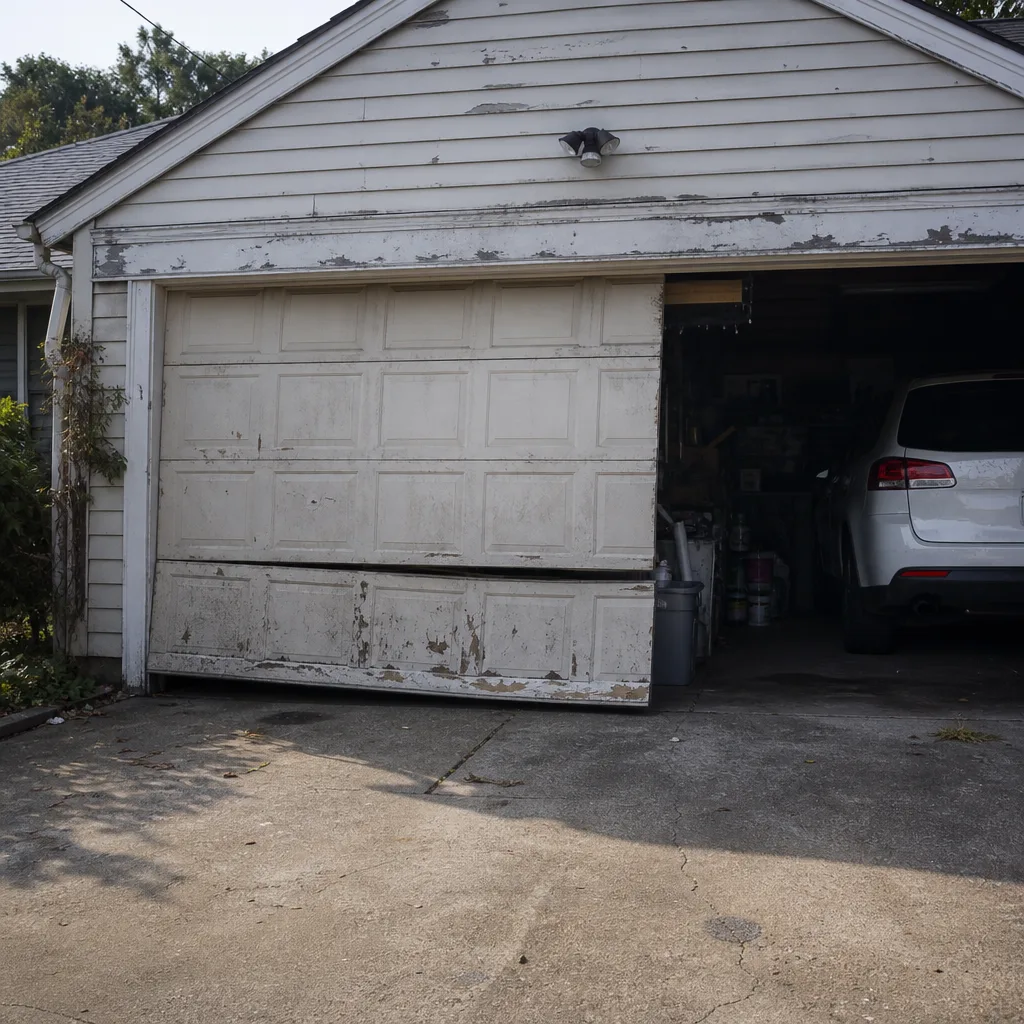 Before
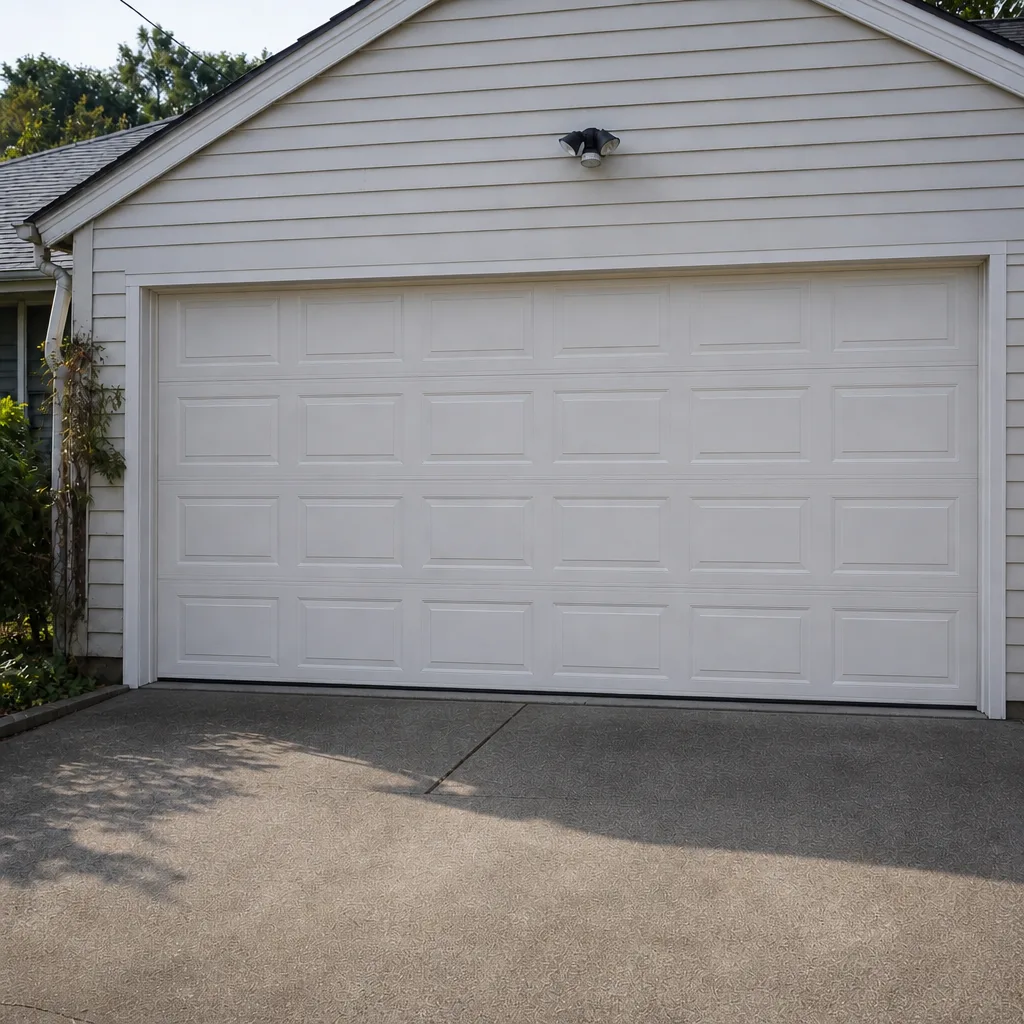 After
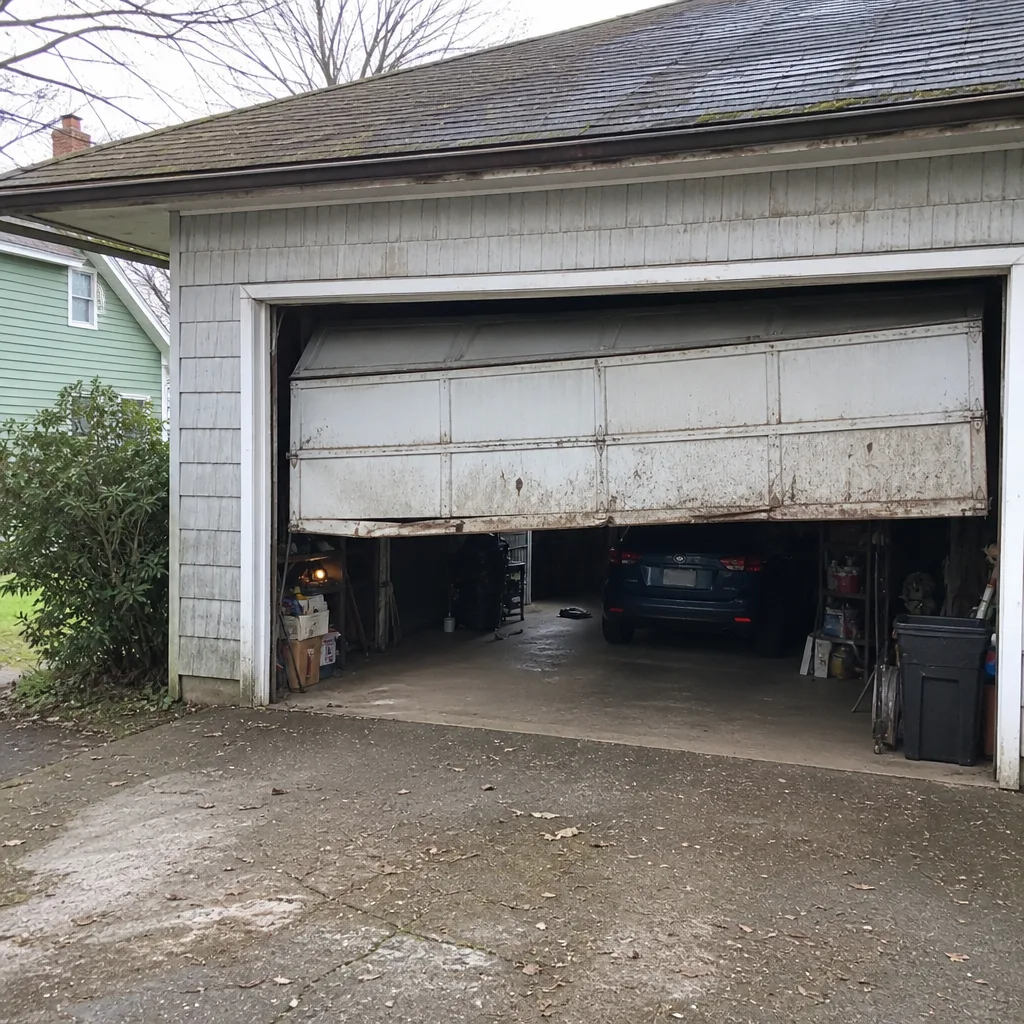 Before
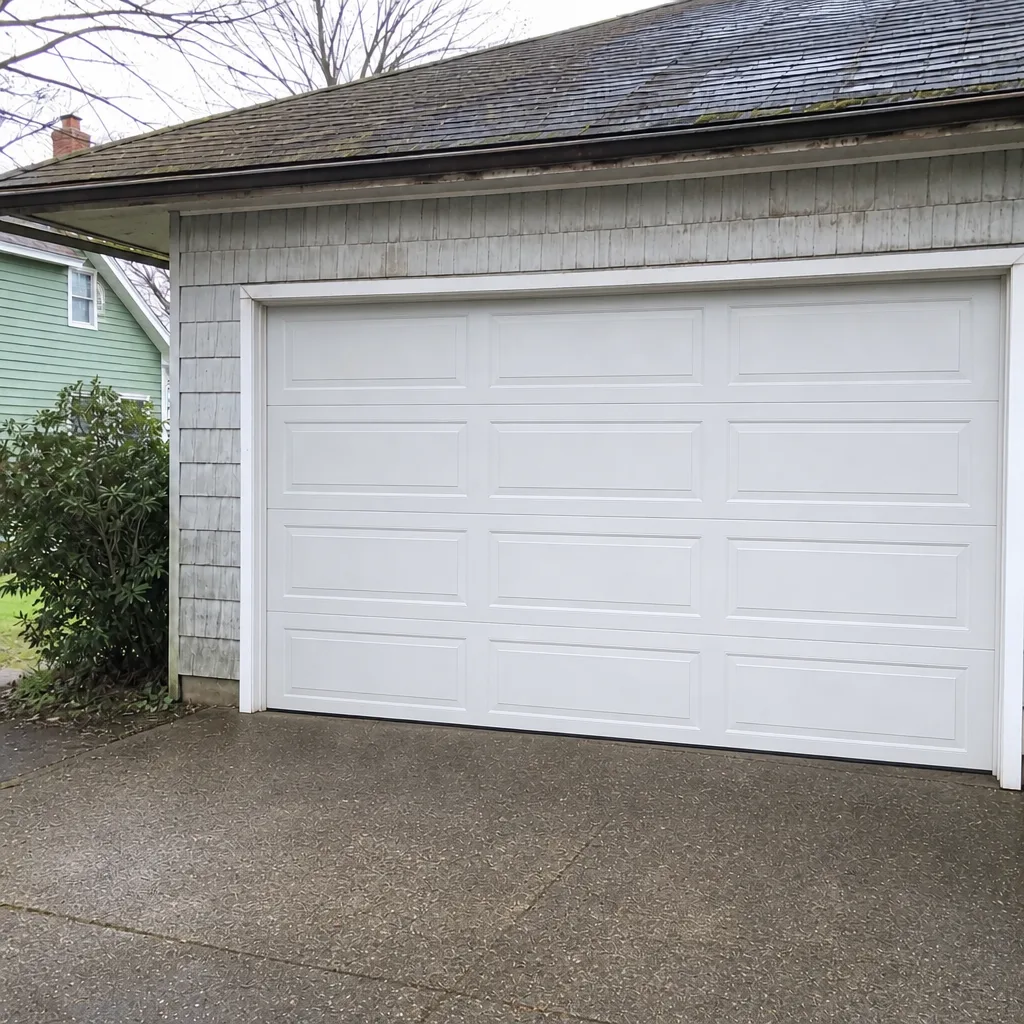 After
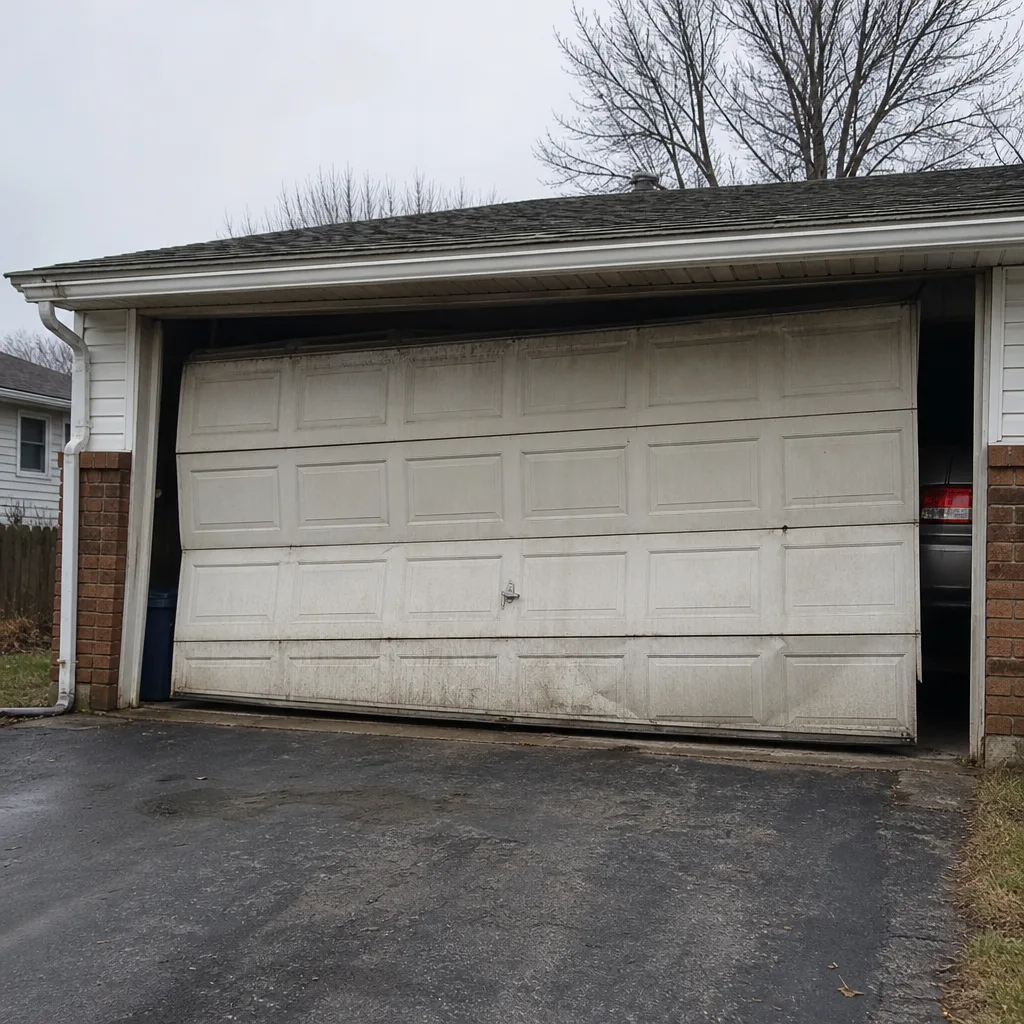 Before
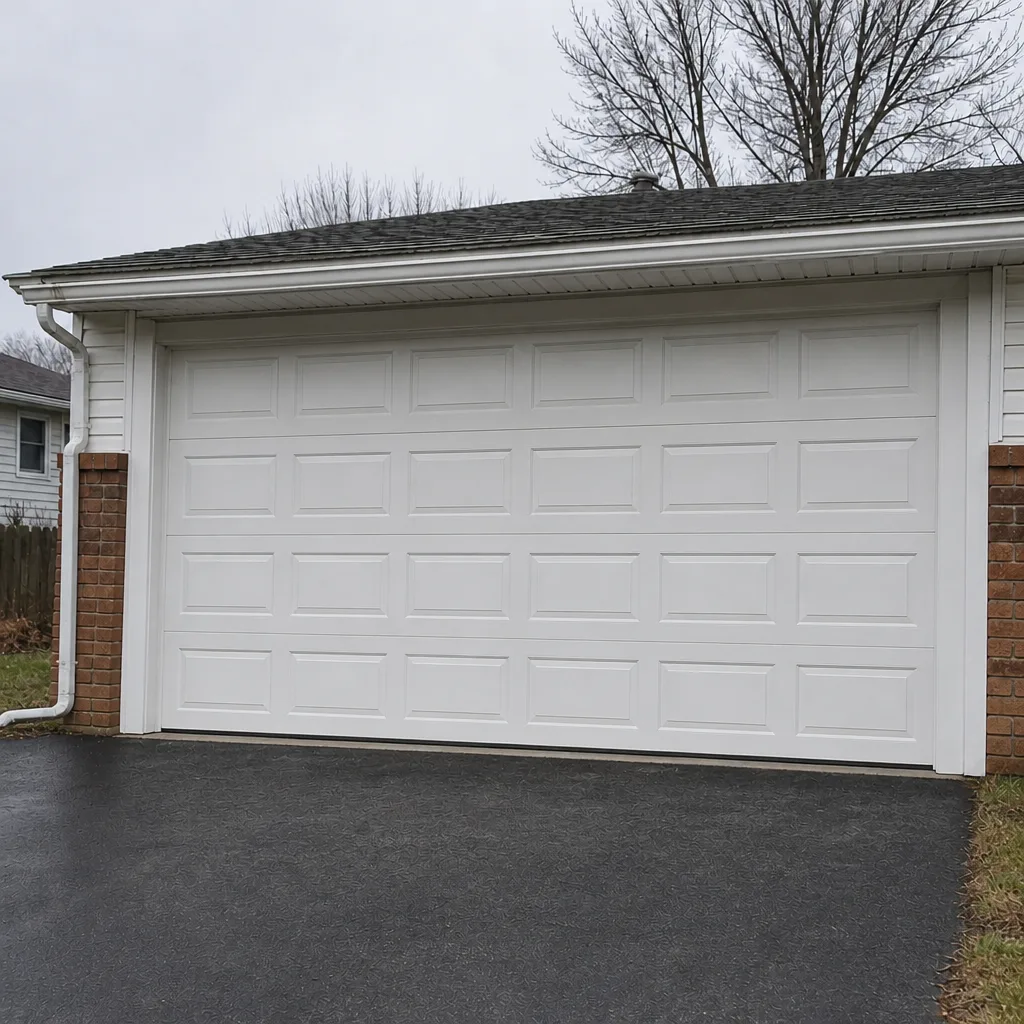 After
When to Call a Professional
Call a professional when you see or hear anything on the top rung of the urgency ladder – a pop, a slack door, a snapped cable, a door off its track – or when a balance test shows the door won’t hold halfway. Call when grinding or uneven travel has been building for a week or more. Call when the door is loud enough that you’ve started bracing for it. Call when you’re weighing a new opener, or when you’re wondering whether it’s time to replace a door that’s past its service life. And call when you just want a straight answer about whether the noise you’re hearing is serious. Bramley Garage Door Repair offers free estimates in Middletown – call (877) 492-2037. Our technicians have up to 11 years of experience, and the price is quoted and agreed before any work starts, so you’re never guessing about the bill.
Frequently Asked Questions
The first sign is usually a door that feels heavier and moves slower or more unevenly than it used to, often along with a balance test that shows the door won’t hold halfway. A loud pop followed by a slack door is the moment the spring actually breaks. If you’re seeing the slower-motion signs, have it looked at before the pop – call (877) 492-2037.
Yes. Torsion and extension springs, and the cables that run with them, are under heavy tension, and a spring or cable can release that energy without warning. Noisy springs or cables are a reason to call a trained professional, not to reach for tools. Leave the winding and cable work to someone trained, and get the door assessed.
Once a season is plenty, and definitely after any hard cold snap. The test takes 30 seconds – disconnect the opener, lift the door halfway, and see if it holds. A door that stays put is balanced; one that drifts down is under-supported. If it drifts, call (877) 492-2037 for an assessment.
A door that’s slightly slower on the very coldest mornings is normal, but a door that’s noticeably slower than last winter is telling you the springs are losing lift. The cold is a stress test, and a door that fails it every year is a door whose wear is showing. If the slowness is new, call (877) 492-2037 for a look.
Replacement makes sense when the door’s structure is failing – multiple cracked panels, bent tracks, a frame that’s pulled loose – or when the hardware is old enough that repeated repairs cost more than a new door would. Repair makes sense when the panels and frame are sound and the problem is springs, opener or hardware. We’ll tell you which one you’re looking at, and the price is quoted before work starts.
Yes. We work on the brand you already have, and our technicians are experienced across Genie, Clopay, Amarr, Wayne Dalton and other common residential brands. If your door is older, that matters – the hardware in front of us is the hardware we work with, not a generic workaround.
The Bottom Line
Your garage door’s warning signs split into two groups: the sounds and behaviors that mean “schedule a look” and the ones that mean “call today.” Grinding and squealing are usually bearings, rollers and hinges, and they respond well to a scheduled repair. Popping, slack doors, snapped cables and doors off their track are the top of the ladder – the ones that can’t wait. Test the balance once a season, read the sounds by their specific type, and let the cold winter months tell you what the door has been hiding. If you’re in Middletown and you want a trained set of eyes on the door, we’re one call away: (877) 492-2037.
Written by the team at Bramley Garage Door Repair.